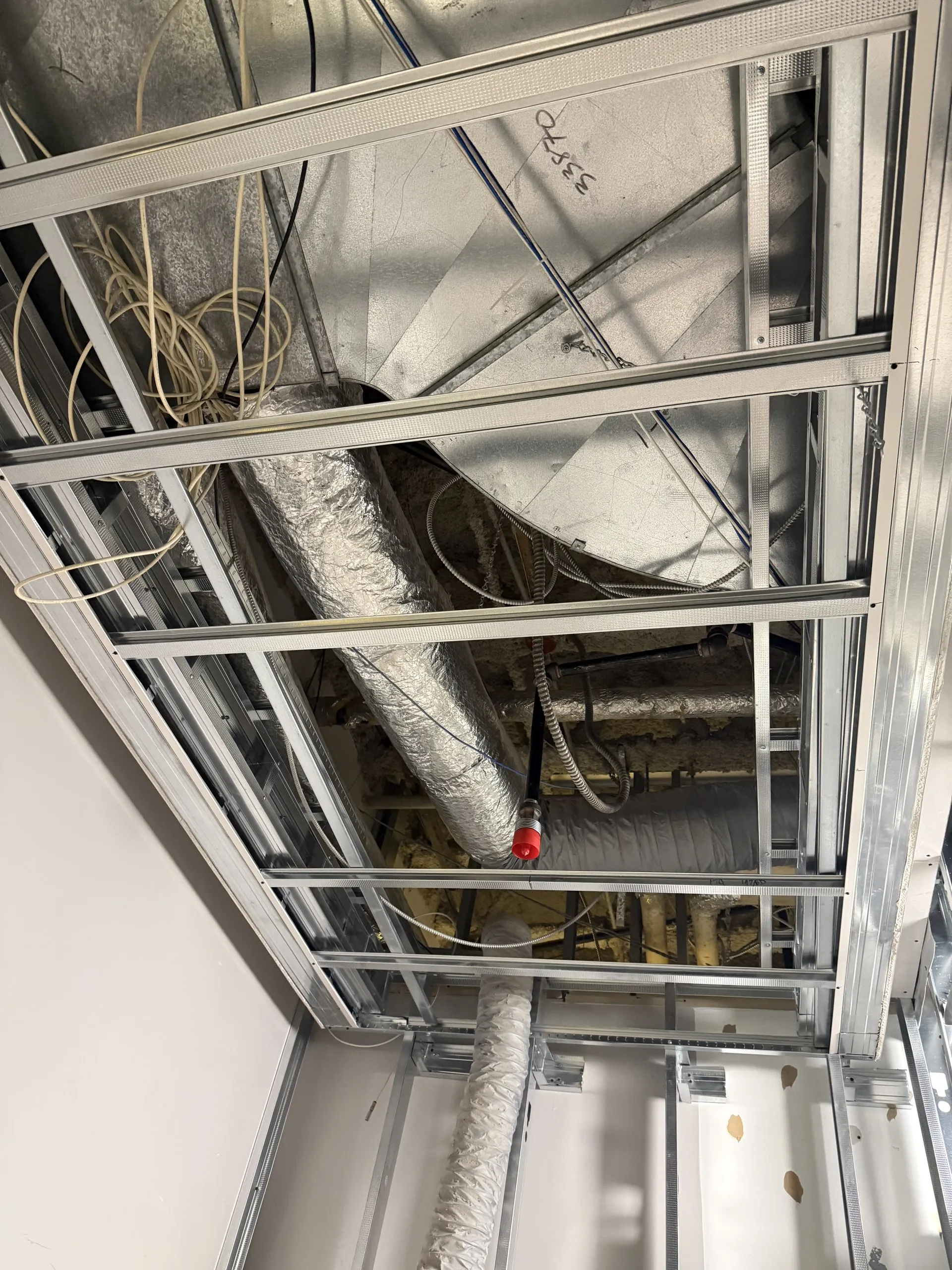
Commercial renovation is not residential renovation with bigger invoices — different code classifications, engineer-stamped drawings, more trades, more inspections, more liability. Below is the ten-point checklist we'd use if we were hiring a commercial contractor ourselves. And yes, we're a contractor writing about how to hire one — so put us through the same ten points. That's what they're for.
Want the real number for your unit?
Free site walk across Toronto & the GTA — you get a written scope and budget range within one business day.
Get a build-out estimate → or call 647-477-7999Commercial buildings in Ontario fall under different occupancy classifications than residential, with more stringent fire, accessibility and safety standards. The permits usually require engineer-stamped drawings and more detailed applications. More trades, engineers and inspectors have to land in the right order. And the liability is bigger — when something goes wrong in a commercial space, it's your business that absorbs it. A contractor who does excellent residential work may simply not have the systems for any of that — and you find out mid-project.
Non-negotiable. Ask about commercial renovation experience specifically — how many projects, what types of space (office, retail, restaurant, medical), what sizes, and which commercial clients will take a reference call. Twenty years of residential work with no commercial portfolio is a bigger risk than a younger firm that does commercial every week.
In Ontario: municipal business licensing, WSIB coverage for every worker on your site, commercial general liability insurance (minimum $2 million for most projects), and errors and omissions coverage on design-build work. Ask for the certificates — don't take anyone's word for it, ours included. If an uninsured worker is injured on your site, the liability can land on you.
A good commercial contractor runs the whole permit process. Ask who prepares the application, how they work with local building departments, how inspections are handled during construction, and what happens when a permit stalls. A contractor who's vague about permits — or suggests starting work before they're issued — has just answered your question. Our commercial permits guide covers what the process should look like.
Ask for specifics: a schedule with milestones, a communication rhythm (weekly reports, meetings, a platform you can check), a defined change-order process, and a named point of contact. The best commercial contractors run dedicated project management — not one owner juggling everything between swinging a hammer.
A professional commercial quote is itemized — costs broken down by trade and scope, allowances stated, inclusions and exclusions in writing, a payment schedule tied to milestones, and a change-order process. Be careful with the quote that comes in far below the others: in commercial work a lowball isn't a bargain, it's a list of things you'll pay for later as change orders.
Get references from at least three recent commercial projects and actually call them: on time? On budget? How were surprises handled? Would you hire them again? Visit a finished project if you can — photos flatter, drywall doesn't.
Electrical, plumbing, HVAC, fire protection — commercial work runs on subcontractors. Ask whether they use the same crews consistently, how subs are vetted, and whether the subs carry their own insurance and WSIB. Long-standing sub relationships are what smooth coordination actually looks like.
A financially stressed contractor can't absorb the normal bumps of a commercial job — and might cut corners, delay material orders, or vanish mid-project. How long in business? A real office or just a cell number? Bonded? What payment terms? A deposit demand over 10–15% of project value often means your money is funding someone else's job.
One firm handling design and construction gives you a single point of accountability, cost control during the design phase, faster delivery, and fewer gaps between what's drawn and what's built. Not every project needs it — but it's worth having on the table.
A commercial renovation is a months-long working relationship. Slow to answer questions now, vague about challenges now, hard to pin down now — that's the preview, not the exception. Hire the contractor who tells you an inconvenient truth during the sales process.
This checklist is how we run our own projects: commercial interiors only, across Toronto and the GTA; a named point of contact and a detailed schedule on every job; itemized quotes; WSIB and liability certificates available before you ask; and references you can actually call. Put us through the ten points — we wrote them down because we're comfortable being measured against them.
Buildup Contracting builds commercial interiors across Toronto & the GTA — restaurants first, retail and office built with the same discipline. Explore our retail fit-out services and office & commercial tenant improvement services, or book a free site walk — written scope and estimate within one business day.
4.9 on Google
Every review from a GTA operator we built for
“BuildUp handled the full build-out of our restaurant and I honestly couldn't have asked for a smoother process. Lev understood from day one how important it was to open on schedule, and he kept everything moving — permits, inspections, the kitchen, the dining area — without me having to chase anyone.”
Kamesh Parcha · via Google
What happens when you get in touch
You deal with Lev directly. He does the site walk and writes the scope — not a salesperson who hands you off.
A written scope and a first read on budget within one business day.
Nothing is booked or billed until you say so. The site walk is free anywhere in the GTA.
WSIB clearance · $5M commercial liability · 1-year workmanship warranty · Mon–Fri 8am–6pm
Free · one business day
Three questions. We come back with a preliminary scope and a first read on budget within one business day — plus a free site walk anywhere in the GTA if it makes sense.
Prefer to talk? Call 647-477-7999. WSIB clearance and $5M commercial liability insured · 1-year workmanship warranty.
Planning a build-out
Buildup Contracting builds offices, retail stores and restaurants across the Greater Toronto Area — permits, trades and inspections on one contract, with a written scope and a first read on budget within one business day of the site walk.
Restaurant constructionRetail fit-outsOffice and commercial TIFranchise and multi-unitLandlords and property managers
Building in a specific city? These pages cover the local approvals, the departments that review them, and what usually moves the schedule there.
More of the research we use to scope real projects:
Commercial kitchen design mistakesChoosing a restaurant contractorOffice fit-out costs in TorontoBubble tea shop build-outsLease-to-opening checklistChoosing a renovation contractorAll guides
Send us the unit address, approximate square footage and your concept. We walk the space for free, then send a written scope and a real price range — no obligation.