Published: April 18, 2026 · Last reviewed: April 2026 · Reviewed by: Buildup Contracting Pre-Construction Team · Service area: Toronto & GTA
Planning numbers, not a quote — your space and your municipality decide the specifics. Full notes at the end of this guide.
A restaurant build-out moves through eight clear phases, from the first site walk before you sign the lease to the soft-open trial nights before opening day. The owner, the contractor, the architect and engineering team, the landlord, and the city/health/fire authorities each carry specific items inside each phase — and most of the painful surprises in a Toronto or GTA build-out come from items that fell into the gap between those owners.
Use the master checklist below on a site walk, during lease review, in design coordination, and through opening week so nothing slides off the table. These are planning checklists that vary by site condition, municipality, supplier availability, and the specific scope your landlord agreed to in the work letter.
If you want to walk this list with a contractor before you sign anything, Buildup Contracting is happy to attend a site visit. We do restaurant build-outs across Toronto and the GTA, including Mississauga, Vaughan, Markham and Richmond Hill.
In this guide: the eight phases from lease to opening, the checklist for each, and the items operators most often miss.
Want the real number for your unit?
Free site walk across Toronto & the GTA — you get a written scope and budget range within one business day.
Get a build-out estimate → or call 647-477-7999A restaurant build-out is not one project. It is four overlapping projects — a real-estate project (the lease and work letter), a design project (architect, mechanical, electrical, plumbing, kitchen design), a construction project (demo, rough-in, finishes, equipment), and a regulatory project (building permit, health pre-opening, fire, electrical, gas). Each of those four has its own clock, its own owner, and its own failure mode.
The cleanest way to keep them aligned is a phase-by-phase checklist that names who is doing what. That is what this article gives you. Each phase below is presented as a table with these columns:
A check mark in a column means that party is responsible for that item or has to be present for it. More than one check mark in a row is normal — most items are coordination, not solo work.
Buildup's role is the construction-side coordination, the on-site reads during a site walk, and the trade scheduling once permits are in. The architect and engineering team own the permit drawings and stamping. The owner owns the menu, the equipment list, the lease decisions, and the opening-day timing.
If you want a parallel cost view alongside this checklist, see our restaurant build-out cost guide. For how the calendar lays out, see the build-out timeline. For the permit side specifically, the Ontario restaurant permits guide walks through every permit family.
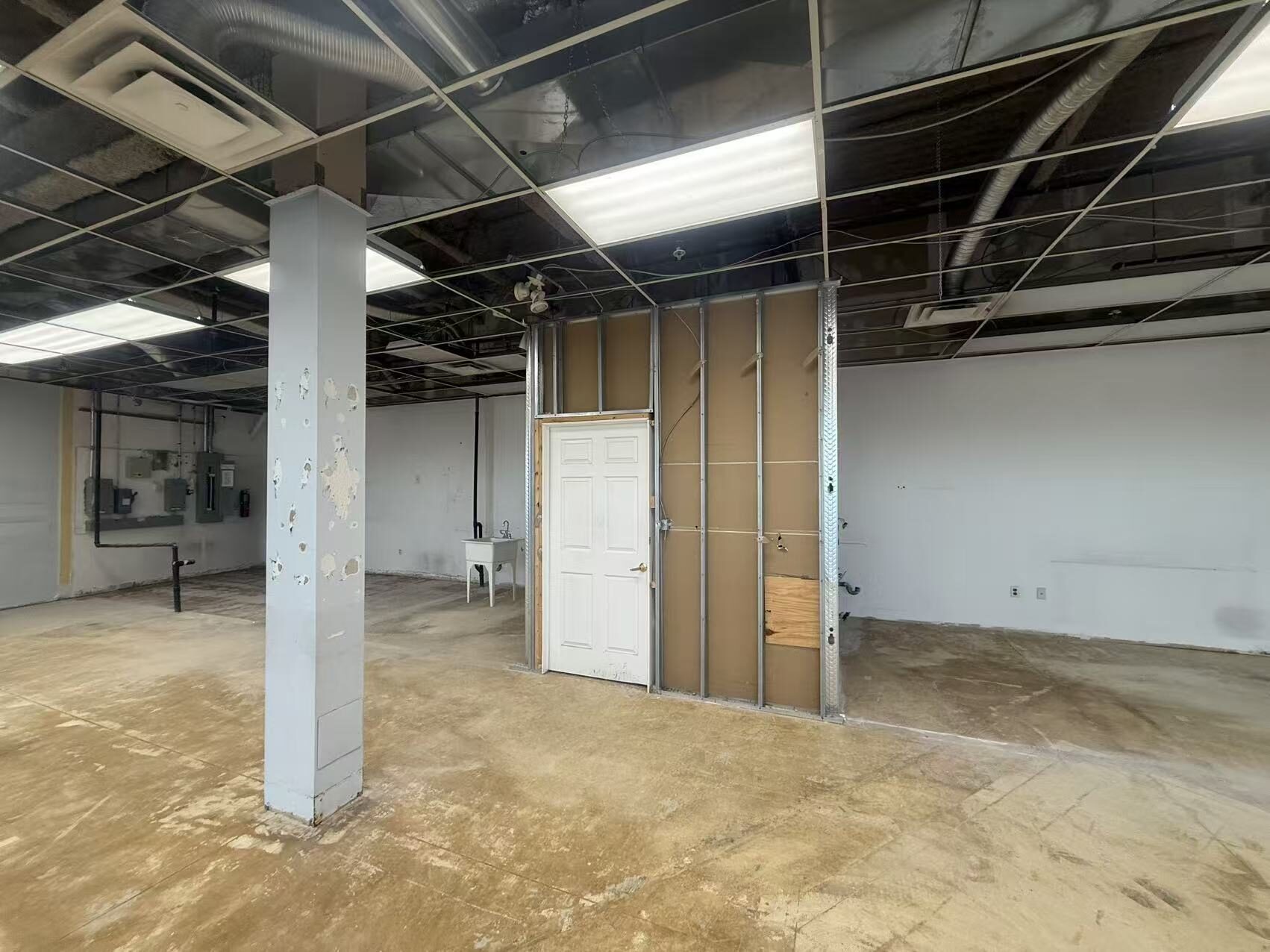
This is the cheapest phase to fix problems in. Once the lease is signed, every constraint in the building becomes your problem. Walk the site with a contractor before you sign, not after.
| Item | Owner | Buildup | Architect / Engineer | Landlord | Municipality / Health / Fire |
|---|---|---|---|---|---|
| Site walk with contractor before signing | Attend | Lead | — | Provide access | — |
| Read the work letter line by line, including landlord's-work vs. tenant's-work split | Lead with Buildup | Review | — | Provided document | — |
| Confirm electrical panel amperage and available spare capacity | Confirm with utility | On-site read | — | Confirm in writing | — |
| Confirm gas service capacity and meter size | Confirm with utility | Notes scope | — | Confirm in writing | — |
| Identify existing grease interceptor (size, location, age) | — | On-site read | — | Confirm if landlord-owned | — |
| Identify existing exhaust shaft / roof penetration paths | — | On-site read | Confirm feasibility on plan | Confirm rooftop access | — |
| Confirm whether the existing space had a previous restaurant use | Ask landlord | Confirm from drawings | — | Provide history | — |
| Confirm zoning permits a restaurant at this address | Confirm with municipality | — | Verify on plan | — | Confirm zoning |
| Confirm parking and accessibility entry requirements for the unit | — | Notes scope | Verify on plan | — | Confirm if site plan applies |
| Confirm fixturing period (free-rent build period) length | Negotiate | Estimate build duration to support negotiation | — | Negotiate | — |
A few notes on this phase. Mall and plaza landlords sometimes give significant cash tenant-improvement money — we have seen $200,000+ on certain bubble-tea deals — and in other cases the cash is capped and the operator gets free-rent months instead. Both are real planning levers, but TIA outcomes are case-by-case and need to be negotiated against your specific work letter, not assumed. For more on that, see our lease and work letter guide.
The site walk itself usually takes one to two hours. Have your contractor read the panel, look at the ceiling for existing penetrations, look under sinks for existing drains, and look at the back wall for whether a hood path is even possible. None of that is permit work. It is informed feasibility before you commit.
You have a signed lease and a fixturing period that has started ticking. The next four to eight weeks are design. The faster the owner gives the design team a locked menu and a complete equipment list, the faster the drawings get to permit submission.
| Item | Owner | Buildup | Architect / Engineer | Landlord | Municipality / Health / Fire |
|---|---|---|---|---|---|
| Lock the concept and the menu | Lead | — | — | — | — |
| Provide a complete equipment list (with model numbers, voltages, gas demand) | Lead with kitchen designer | Review for trade impact | Required for drawings | — | — |
| Hire the architect | Lead | Recommend if needed | Engaged | — | — |
| Engage mechanical engineer for hood, exhaust, make-up air | Engage via architect | Recommend if needed | Engaged | — | — |
| Engage electrical engineer for panel and load calculations | Engage via architect | Recommend if needed | Engaged | — | — |
| Engage plumbing engineer for grease, sanitary, hot water | Engage via architect | Recommend if needed | Engaged | — | — |
| Confirm seat count and washroom count target | Lead | — | Verify on plan | — | — |
| Provide branding and finishes intent (millwork, tile, lighting direction) | Lead | — | Document on plan | — | — |
| Confirm landlord design-review process and timing | Confirm | — | Submit for landlord review | Review and approve | — |
| Confirm signage scope and storefront constraints | Confirm with sign vendor | Coordinate sign install rough-in | Coordinate on plan | Approve sign per lease | — |
Equipment lead times drive a lot of this phase. Hoods, walk-ins, and Type-1 hood make-up air units in particular can be eight to fourteen weeks. We track this in our restaurant equipment lead times guide — owners who order long-lead items during design rather than after permit issuance gain weeks back on opening day.
This phase is where Buildup is mostly in advisory mode. Permits are the architect and engineering team's work. Buildup's role here is the constructability read — flagging things on the drawings that will be hard to build, expensive to coordinate, or risky on the inspection day.
Drawings are coming together. This phase is about making sure the permit package is complete before it goes in, because resubmissions cost weeks. The City of Toronto's building permit review streams explain how a tenant fit-out is routed.
| Item | Owner | Buildup | Architect / Engineer | Landlord | Municipality / Health / Fire |
|---|---|---|---|---|---|
| Final equipment list locked (no more changes) | Lead | Review for trade impact | Confirm on drawings | — | — |
| Architectural drawings stamped | — | Review | Stamp and submit | — | Receive submission |
| Mechanical drawings stamped (hood, exhaust, make-up air, HVAC) | — | Review | Stamp and submit | — | Receive submission |
| Electrical drawings stamped, panel schedule complete | — | Review | Stamp and submit | — | Receive submission |
| Plumbing drawings stamped (grease, sanitary, hot water) | — | Review | Stamp and submit | — | Receive submission |
| Structural review if any new openings, hood curb, or rooftop unit | — | Review | Stamp and submit | — | Receive submission |
| Site plan confirmed (entry, accessibility, parking) | — | — | Confirm on plan | — | Receive submission |
| Landlord-side scope confirmed in writing (e.g., who upgrades the panel) | Confirm in writing | — | Reference on plan | Confirm in writing | — |
| Sign permit application started | Lead with sign vendor | — | Coordinate on plan | — | Receive submission |
| Health pre-construction review if required by region | Lead | — | Coordinate | — | Receive submission |
The owner-confirmed planning-estimate for this phase: building permit review for a typical restaurant tenant fit-out in the GTA is often six to twelve weeks once the package is complete, but timelines vary by municipality and review complexity — see our GTA permit timelines compared for how Toronto, Mississauga, Vaughan, Markham, and Richmond Hill differ.
Buildup's pre-construction permit coordination service runs in parallel with the architect's work in this phase — we are not stamping the drawings, we are reading them for buildability and coordinating with trades so that the day the permit is issued, demo can start.
Permit is issued. Now the construction project takes over from the design project. Demo is the first physical work on site, and it is where surprises (existing structure, existing services, hidden landlord items) surface fast.
| Item | Owner | Buildup | Architect / Engineer | Landlord | Municipality / Health / Fire |
|---|---|---|---|---|---|
| Building permit issued | — | Confirm receipt | Submission review closed | — | Issue permit |
| Demo permit pulled (if required separately by municipality) | — | Pull | — | — | Issue |
| Construction contract signed and deposit released | Sign and fund | Sign | — | — | — |
| Insurance certificates filed with landlord | Provide if owner-side | Provide builder's risk and liability | — | Receive and file | — |
| Hoarding and dust barrier plan in place | — | Lead | — | Approve plan | — |
| Site protection (floors, common-area paths, neighbour units) | — | Lead | — | Approve plan | — |
| Confirm landlord-side removal scope (e.g., existing landlord-owned mechanical) | Confirm | Coordinate with landlord trades | — | Confirm and remove | — |
| Confirm utilities live, locked out, or capped as needed for demo | — | Coordinate | — | Confirm meter status | — |
| Confirm working hours allowed by lease and by municipality noise rules | Confirm | Schedule trades within window | — | Confirm hours | — |
| Pre-demo walkthrough with landlord and contractor | Attend | Lead | — | Attend | — |
Mall and food-court tenants often have stricter delivery, hoarding, and after-hours rules than street-front plaza tenants. We document those rules in writing during this phase so trades aren't surprised at 7 a.m. on day one.
Demo is done, the space is clean, the framing layout is marked. Now the trades come in for rough-in: mechanical ductwork, electrical wiring in walls, plumbing under the slab or in the ceiling, and any structural work for the hood curb or rooftop unit.
| Item | Owner | Buildup | Architect / Engineer | Landlord | Municipality / Health / Fire |
|---|---|---|---|---|---|
| Demo complete and inspected on site (note any structural surprises) | — | Lead | Address structural finding if any | — | — |
| Mechanical, electrical, plumbing trade scheduling sequenced | — | Lead | — | — | — |
| Long-lead equipment confirmed in production / shipped | Confirm with vendor | Track procurement | — | — | — |
| Hood and make-up air unit ordered, delivery date confirmed | Confirm with vendor | Procure and stage | Verify model matches drawings | — | — |
| Walk-in cooler / freezer ordered, delivery date confirmed | Confirm with vendor | Procure and stage | — | — | — |
| Underground plumbing layout reviewed against equipment list | — | Review | Confirm on plan | — | — |
| Electrical service upgrade coordinated with utility if required | Coordinate with utility | Coordinate with electrician | Confirm on plan | Coordinate access if landlord-owned | — |
| Gas service upgrade coordinated with utility / TSSA if required | Coordinate with utility | Coordinate with gas trade | Confirm on plan | Coordinate access if landlord-owned | TSSA notified |
| Framing layout marked on slab, walked with owner | Walk and approve | Lead | Confirm on plan | — | — |
| Site safety, first aid, and trade orientation in place | — | Lead | — | — | — |
This is where a contractor's trade coordination does the heavy lifting. A restaurant has six to twelve trades on a small footprint. The order they show up in matters as much as the quality of their work.
Rough-in is complete and inspected. Walls are about to close. This is the moment to confirm everything that goes inside the wall is right, because once drywall is up, it is expensive to revisit.
| Item | Owner | Buildup | Architect / Engineer | Landlord | Municipality / Health / Fire |
|---|---|---|---|---|---|
| Plumbing rough-in inspection passed | — | Schedule and host | — | — | Plumbing inspector attends |
| Electrical rough-in inspection passed (ESA) | — | Schedule and host | — | — | ESA inspector attends |
| Framing / drywall transition inspection (building) | — | Schedule and host | — | — | Building inspector attends |
| Hood and make-up air system installed | — | Lead | Verify against drawings | — | — |
| Equipment landed and set in place (cooking line, walk-in, prep) | Confirm equipment receipt | Lead placement | — | — | — |
| Final electrical connections to equipment scheduled | — | Lead | — | — | — |
| Final gas connections to equipment scheduled (TSSA) | — | Lead | — | — | TSSA inspection scheduled |
| Tile, millwork, finishes ordered and on track | Confirm finishes choices | Procure and stage | Confirm on plan | — | — |
| Washroom rough-in confirmed barrier-free per accessibility requirements | — | Lead | Confirm on plan | — | — |
| Storefront and signage scope coordinated | Coordinate with sign vendor | Coordinate sign rough-in | Confirm on plan | Approve sign | — |
For specifics on hood and ventilation choices that come up in this phase, see our Type-1 vs Type-2 hood guide. For grease interceptor sizing, see the grease trap sizing guide.
Finishes are in. Equipment is connected. The space looks like a restaurant. The next step is a sequence of inspections — building, electrical, gas, plumbing, then health pre-opening, then fire. They have to happen in the right order because some inspectors will not pass until others have.
| Item | Owner | Buildup | Architect / Engineer | Landlord | Municipality / Health / Fire |
|---|---|---|---|---|---|
| All trades complete and signed off internally | — | Lead | — | — | — |
| Inspections scheduled in the right sequence | — | Lead | — | — | Inspectors attend |
| Final building inspection passed | — | Schedule and host | Address any deficiencies | — | Building inspector attends |
| Final electrical inspection passed (ESA) | — | Schedule and host | — | — | ESA inspector attends |
| Final gas inspection passed (TSSA) | — | Schedule and host | — | — | TSSA inspector attends |
| Final plumbing inspection passed | — | Schedule and host | — | — | Plumbing inspector attends |
| Hood fire-suppression system installed and tagged | — | Schedule and host | — | — | Fire inspector reviews |
| Punchlist underway with owner walk | Walk and list | Lead and resolve | — | — | — |
| Operator's documentation pack assembled (manuals, warranties, as-builts) | Receive | Lead handover | Provide as-builts | — | — |
| Health pre-opening application filed with regional public health | Lead | Coordinate site readiness | — | — | Public health receives application |
The health pre-opening application is the owner's filing, but the readiness of the site is the contractor's responsibility. The City of Toronto's starting a food business guide walks through what Toronto Public Health expects on the day of the pre-opening visit. Region of Peel and York Region public health units have their own equivalents.
All inspections are passed or in motion. Equipment is calibrated. Staff is being trained. The last week is about removing risk from opening night.
| Item | Owner | Buildup | Architect / Engineer | Landlord | Municipality / Health / Fire |
|---|---|---|---|---|---|
| All final inspections passed | — | Coordinate | — | — | All inspectors signed off |
| Public health pre-opening walk done and approved | Attend | Coordinate | — | — | Public health inspector attends |
| Fire inspection done | — | Schedule and host | — | — | Fire inspector attends |
| Hood and fire-suppression tag visible and current | — | Confirm | — | — | — |
| Punchlist closed out | Walk and confirm | Lead and resolve | — | — | — |
| Final cleaning complete | Confirm | Coordinate | — | — | — |
| Equipment commissioning complete (refrigeration, cookline, dishwasher) | Confirm | Lead | — | — | — |
| Soft-open trial nights scheduled | Lead | Be available for last fixes | — | — | — |
| Service contracts (hood cleaning, fire suppression, grease) lined up | Lead with vendors | Recommend reputable vendors | — | — | — |
| Signage live, storefront clean, opening day plan locked | Lead | Provide last-mile support | — | Approve final signage if required | — |
Buildup stays on call for the first week or two after opening for service and maintenance — small fixes, last-mile finishes, and quick adjustments after the kitchen has run real volume. The first weekend always teaches the operator something.
These are not "if you miss this you fail" warnings. They are the patterns experienced operators have learned to head off early. We see them across our project experience on Toronto and GTA restaurant fit-outs.
How early should I bring a contractor in — before or after I sign the lease?
Before. A site walk with a contractor before signing usually takes one to two hours and surfaces panel, gas, exhaust, and structural constraints that would otherwise be locked in by the lease. It does not commit you to that contractor.
Who pulls the building permit — me, the architect, or the contractor?
The permit is normally pulled by the architect or designer of record, who has stamped the drawings. The contractor coordinates the construction-side documents and inspections that follow. The owner signs the application and pays the fees.
How long does a typical Toronto restaurant build-out take from lease signing to opening?
A typical Toronto restaurant tenant fit-out runs roughly four to seven months from lease signing to opening, with design taking about six to ten weeks, permit review six to twelve weeks, and construction eight to fourteen weeks. These overlap, but the dependencies above are real. Site complexity, landlord coordination, and equipment lead times can push the total. See our build-out timeline for how the calendar lays out.
Do I need a separate demo permit?
It depends on the municipality and the scope. Some cities issue demo as part of the building permit; others require a separate demo permit for any structural removal. Your contractor and architect will confirm during the permit submission phase.
Who is responsible if the landlord's electrical panel turns out to be undersized?
That depends on the work letter. If the work letter says the landlord delivers a panel of a certain capacity and they did not, it is a landlord obligation. If the work letter is silent, it usually becomes the tenant's cost. This is exactly why the work-letter line-by-line review in Phase 1 matters.
What inspections happen on opening week?
Typically the final building, electrical (ESA), gas (TSSA), plumbing, and fire inspections, followed by the public health pre-opening walk. The order matters — health and fire usually come last, after the trades inspections are signed off.
Does Buildup pull my permits for me?
Buildup is a construction-only contractor — permits are the architect's and engineer's stamped work. We coordinate the construction-side documents, schedule inspections, and run project management so the permit holder has clean information. For more on how this works, see our FAQ.
How do I use this checklist on a real project?
Print it. Bring it to your first site walk before signing the lease. Bring it to your first design meeting with the architect. Use it as the agenda for the weekly construction meeting. Mark items off as they close. The checklist is the artifact that keeps the four parallel projects (real estate, design, construction, regulatory) talking to each other.
If you are about to sign a lease, finalize design, or schedule final inspections and want a contractor to walk this checklist with you item by item, contact Buildup Contracting at info@buildupcontracting.ca or 647-477-7999. We attend site walks before lease signing across Toronto and the GTA at no cost to the operator.
This article is for planning purposes only. Cost, timeline, permit, code, gas, grease trap, public health, and accessibility requirements vary by project scope, municipality, landlord, site condition, engineering, equipment list, and current trade and supplier availability. Confirm specific requirements with the municipality, architect, engineer, landlord, public health unit, fire reviewer, AGCO, registered or certified fuels contractor, electrical contractor, or other applicable authorities.
4.9 on Google
Every review from a GTA operator we built for
“BuildUp handled the full build-out of our restaurant and I honestly couldn't have asked for a smoother process. Lev understood from day one how important it was to open on schedule, and he kept everything moving — permits, inspections, the kitchen, the dining area — without me having to chase anyone.”
Kamesh Parcha · via Google
What happens when you get in touch
You deal with Lev directly. He does the site walk and writes the scope — not a salesperson who hands you off.
A written scope and a first read on budget within one business day.
Nothing is booked or billed until you say so. The site walk is free anywhere in the GTA.
WSIB clearance · $5M commercial liability · 1-year workmanship warranty · Mon–Fri 8am–6pm
Free · one business day
Three questions. We come back with a preliminary scope and a first read on budget within one business day — plus a free site walk anywhere in the GTA if it makes sense.
Prefer to talk? Call 647-477-7999. WSIB clearance and $5M commercial liability insured · 1-year workmanship warranty.
Planning a build-out
Buildup Contracting builds offices, retail stores and restaurants across the Greater Toronto Area — permits, trades and inspections on one contract, with a written scope and a first read on budget within one business day of the site walk.
Restaurant constructionRetail fit-outsOffice and commercial TIFranchise and multi-unitLandlords and property managers
Building in a specific city? These pages cover the local approvals, the departments that review them, and what usually moves the schedule there.
More of the research we use to scope real projects:
Commercial kitchen design mistakesChoosing a restaurant contractorOffice fit-out costs in TorontoBubble tea shop build-outsLease-to-opening checklistChoosing a renovation contractorAll guides
Send us the unit address, approximate square footage and your concept. We walk the space for free, then send a written scope and a real price range — no obligation.