Published: April 25, 2026 · Last reviewed: April 2026 · Reviewed by: Buildup Contracting Pre-Construction Team · Service area: Toronto & GTA
Planning numbers, not a quote — your space and your municipality decide the specifics. Full notes at the end of this guide.
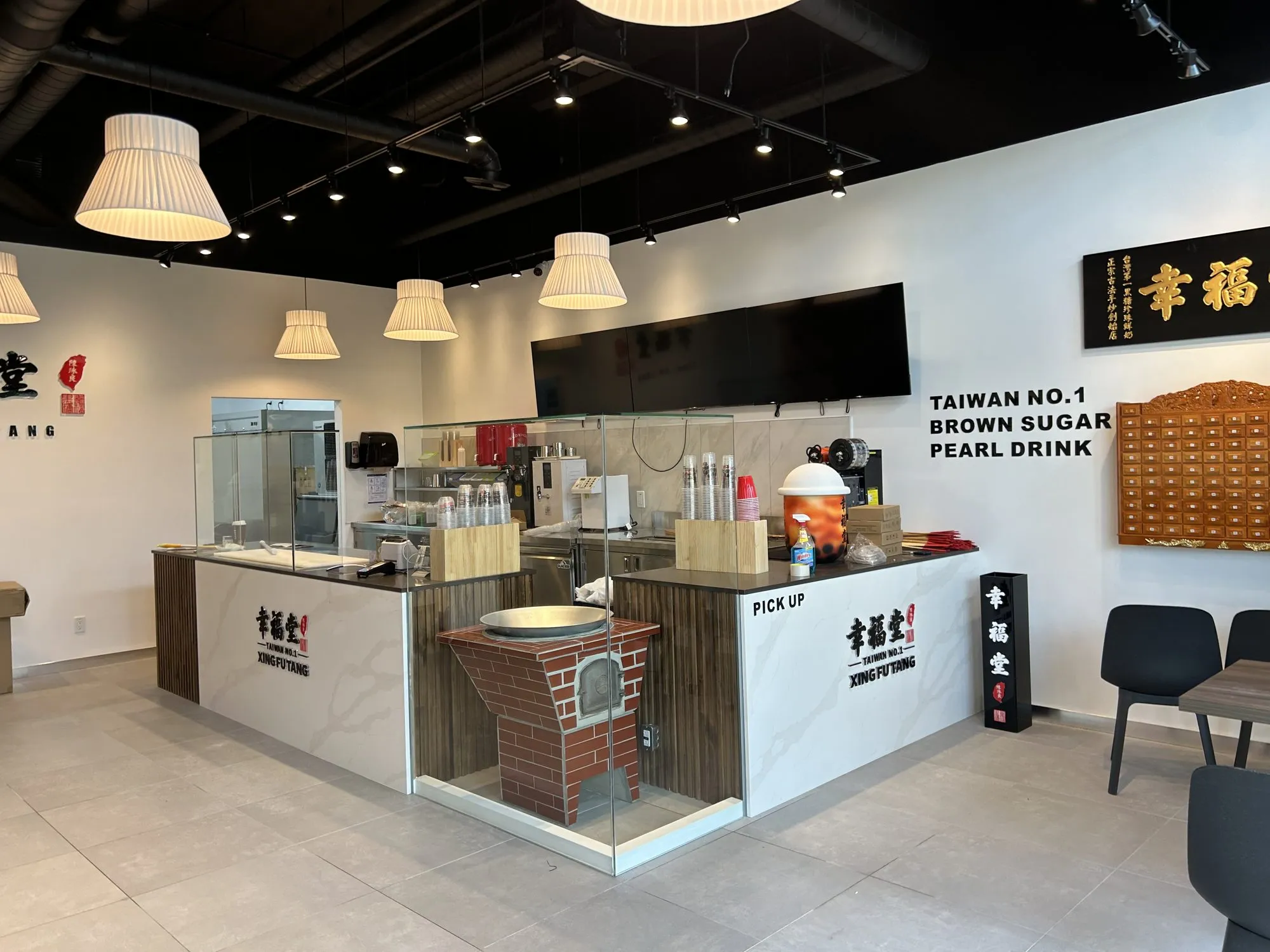
Bubble tea is one of the more approachable restaurant concepts to build in the GTA. There's no fryer line, no grease cooking, and no Type K fire-suppression service contract to renew every year — which is why the construction number is so much lower than a hotpot, QSR, or full-service kitchen at the same square footage.
Most plaza conversions of a former food unit land $80–150k turnkey in 2026 GTA dollars when the previous tenant left a usable food space behind. These are planning estimates that vary by site condition, municipality, supplier availability, and the brand's fit-out package — your real number comes out of a site walk, not a blog post.
This guide covers what a bubble tea build-out actually costs in 2026, what's different about a wet beverage operation, the equipment line, the permit and inspection path, and the lease items worth pushing on before you sign.
In this guide: real 2026 costs · why bubble tea is cheaper than a full kitchen · water filtration · equipment · permits · a pre-lease checklist.
The single biggest cost driver on a bubble tea build is the unit you pick, not the brand you operate. A 600–1,000 sf plaza bay that used to be a cafe, juice bar, or QSR — already plumbed with a three-compartment sink, a hand sink, a mop sink, a grease interceptor, a 200A panel, and a barrier-free washroom — is the cheapest food build we do. The same bay as a bare retail shell adds tens of thousands in plumbing, slab work, and washroom upgrades.
If you're 30–60 days from signing, this is the moment to get the Vaughan and GTA restaurant construction team walking the shortlist with you. We'll flag base-building issues that should land on the landlord's side of the work letter, not yours.
Want the real number for your unit?
Free site walk across Toronto & the GTA — you get a written scope and budget range within one business day.
Get a build-out estimate → or call 647-477-7999In 2026 GTA dollars, here's the range to plan around for a 600–1,000 sf shop:
These figures cover construction — drawings, permits, demolition, framing, drywall, paint, flooring, plumbing, electrical, mechanical adjustments, millwork, and finishes. They do not cover your equipment package (tea brewers, sealers, fructose dispensers, ice machine, reach-in cooler), POS, signage, or smallwares. Bubble tea equipment packages typically run $40–80k separately, and franchise brands often source these through their corporate program.
The numbers above are planning estimates, not Buildup quotes — final pricing depends on the site, the supplier, current trade availability, and the brand's fit-out package. For a fixed number, we walk the space.
Bubble tea has no grease-laden cooking. A full grease-hood make-up air package is usually not required unless hot food, grease cooking, or high-heat equipment is added. That's the line that pulls $50–120k out of a typical kitchen build versus a comparable QSR — no grease hood, no fire-suppression system over the line, no Type K service contract on a recurring schedule.
What that does not mean: that you skip ventilation entirely. The space still needs HVAC and mechanical ventilation review for comfort, humidity, odour, staff working conditions, and health inspection readiness. Tea brewing throws steam; ice machines throw heat; sealers run all day. Without balanced air, the shop gets muggy by 2pm and your staff starts opening the front door.
The mechanical engineer sizes the supply and exhaust to keep the room comfortable and the public-health inspector happy, even though there's no Type I hood overhead. For the underlying rules, see our breakdown of commercial kitchen ventilation under the Ontario Building Code.
You also still need real plumbing. Bubble tea is a wet operation — sealers, shaker stations, ice, tea brewing, fruit prep — and the city's grease and sewer rules treat it as food service. Floor drains in the service area, a small under-counter grease interceptor sized to your sink and floor-drain flow (the plumbing inspector signs off the size), a hand sink within reach of every food-contact zone, a three-compartment sink for shakers and small wares, and a mop sink in the back.
None of this is exotic, but all of it has to be on the drawings before the city's plan reviewer signs the permit. Our grease trap sizing guide for Ontario restaurants walks through how the math actually gets done.
The single biggest taste-and-consistency risk in a GTA bubble tea shop is the water. Toronto and Peel both run hard, chlorinated water — fine for showering, ruinous for jasmine and oolong tea. Build the filtration in from day one:
This is the work we coordinate with the plumber and the franchise's equipment package on every bubble tea job through our trade coordination service. Get it wrong and you'll be replacing brewers and tea shavers under warranty for a year.
Most franchise brands prescribe the equipment line down to the inch. The build's job is to give that line the plumbing, power, and cabinetry it needs in the right order, so a drink hits the customer in under 90 seconds.
A typical bubble tea line, customer-side to back-of-house: order/POS — cup pickup — sealer — shaker station — ice/syrup/fructose dispensers — tea brewer — refrigeration. Refrigeration sizing for a 600–1,000 sf shop:
The most common layout mistakes we catch on a site walk: sealer sitting too far from the brewer (staff lose two steps per drink), ice machine in customer sightlines (loud and visually messy), and the POS station blocking the topping bar at peak. We move these around on paper before a single stud goes up.
If you're building for a brand, expect a fit-out package that locks in finishes, lighting, fixtures, and sometimes specific subcontractors. Various bubble tea brands have specific corporate fit-out packages — Chatime, CoCo Fresh Tea & Juice, Gong Cha, Real Fruit Bubble Tea, and Sharetea each have brand-mandated tile, lighting, counter, and signage standards.
We work with operators bringing those brand requirements through the construction process: reading the corporate manual, coordinating with the brand's approved millworker or signage vendor, and pulling the local permits to match.
The trade-off to plan around: brand-mandated finishes typically add 10–20% to the construction number versus an independent build at the same square footage, partly from the finishes themselves and partly from the brand-approved supply chain. See project experience for the kinds of restaurant projects we've delivered across the GTA.
Three permits cover most bubble tea projects:
You generally won't need a fire-suppression permit, since there's no grease hood. You will meet the building inspector at framing and final, the plumbing inspector during rough-in (and again after the grease interceptor goes in), ESA for the electrical sign-off, and the public health inspector before opening day.
Permit timelines vary by city — and the number to plan against is first review for a clean application; total permit-in-hand can extend with resubmissions or landlord approvals. Toronto generally runs at the longer end; Vaughan, Markham, Richmond Hill, and Brampton are usually faster. Our GTA restaurant permit timelines compared post breaks the cities apart, and the restaurant permits Ontario complete guide covers the full approval chain.
Run this list on every space before you commit. Most bubble tea operators get into trouble in the first two weeks of construction, and a lot of that trouble can be caught on a site walk.
Mall landlords sometimes give significant cash tenant-improvement allowance on bubble tea deals — we've seen $200,000+ go to a single bay. Plaza TI is more case-by-case and tends to come in smaller. If a landlord caps the cash TI lower than you'd hoped, ask for free-rent months at opening instead — months one through three off the rent line are real working capital while you're ramping. Frame both options in the work letter conversation, not just the cash number.
Q: How much does a bubble tea shop cost to build in Toronto in 2026? A: Plan on $80–150k turnkey for a 600–1,000 sf plaza conversion of a former food unit, $150–250k from a bare retail shell, and $200–350k for a premium franchise flagship with custom millwork. These are 2026 GTA planning estimates and exclude equipment, signage, and smallwares.
Q: How long does a bubble tea build-out take? A: Construction itself runs roughly 5–8 weeks once permits are in hand. Permitting runs in parallel and is handled by your architect — first review for a clean application is usually a few weeks; total permit-in-hand can extend with resubmissions or landlord approvals. Most operators land 10–14 weeks lease-to-opening, with Toronto at the longer end and Vaughan, Markham, and Brampton usually faster.
Q: Do I need a grease hood for bubble tea? A: A full grease-hood make-up air package is usually not required for bubble tea unless hot food, grease cooking, or high-heat equipment is added. The space still needs HVAC and mechanical ventilation review for comfort, humidity, odour, staff working conditions, and health inspection readiness — even without a Type I hood. If you're adding a hot food item like waffles or fried chicken, the hood question changes — see our Type I vs Type II hood guide.
Q: What size grease interceptor does a bubble tea shop need? A: Most 600–1,000 sf bubble tea shops install a small under-counter interceptor sized to the three-compartment sink and the floor drains. The plumbing inspector reviews the size against your fixtures and signs it off. Our grease trap sizing guide for Ontario restaurants walks through how the math is done.
Q: Will Buildup work inside Chatime, CoCo, Gong Cha, Real Fruit, or Sharetea brand standards? A: Various bubble tea brands have specific corporate fit-out packages — Chatime, CoCo Fresh Tea & Juice, Gong Cha, Real Fruit Bubble Tea, and Sharetea each have brand-mandated tile, lighting, and counter standards. We work with operators bringing those brand requirements through the construction process — reading the corporate fit-out manual, coordinating with brand-approved millworkers and signage vendors, and pulling the local permits in parallel.
Q: How much should I budget for water filtration? A: A proper carbon pre-filter plus a 100–400 gallon-per-day reverse osmosis unit and a properly sized hot water heater typically lands $4–9k installed in 2026 GTA dollars. Skipping this is the biggest hidden cost in bubble tea — replacement brewers and tea shavers under hard water cost more in year one than the filter would have.
Q: Can I open a bubble tea shop in a plaza without a grease interceptor? A: Not usually. Public health and the plumbing inspector both treat bubble tea as food service, and a three-compartment sink will need an interceptor. If the unit doesn't have one, you'll be coring the slab — confirm with the landlord in writing before signing the lease.
Q: What kind of TI allowance can I expect? A: TI varies widely by landlord and location. Mall landlords sometimes give significant cash TI on bubble tea deals — we've seen $200,000+ on a single bay. Plaza TI is more case-by-case. If cash TI is capped, ask for free-rent months at opening as an alternative. Our lease and work-letter guide walks through the negotiation.
Q: Can Buildup help me find the right space? A: We don't lease real estate, but we'll walk a shortlist of spaces with you before you sign and tell you which one is the cheapest to build. See our FAQ page for how the pre-construction process works.
If you're 30–60 days from signing a lease on a bubble tea unit anywhere in Toronto, Mississauga, Vaughan, Markham, Richmond Hill, or Brampton, send the listing or the address. Buildup will walk the space, flag the base-building issues that should land on the landlord, and come back with a fixed turnkey number — not a range. Book a bubble tea site walk with Buildup or call 647-477-7999 to set it up.
This article is for planning purposes only. Cost, timeline, permit, code, gas, grease trap, public health, and accessibility requirements vary by project scope, municipality, landlord, site condition, engineering, equipment list, and current trade and supplier availability. Confirm specific requirements with the municipality, architect, engineer, landlord, public health unit, fire reviewer, AGCO, registered or certified fuels contractor, electrical contractor, or other applicable authorities.
4.9 on Google
Every review from a GTA operator we built for
“BuildUp handled the full build-out of our restaurant and I honestly couldn't have asked for a smoother process. Lev understood from day one how important it was to open on schedule, and he kept everything moving — permits, inspections, the kitchen, the dining area — without me having to chase anyone.”
Kamesh Parcha · via Google
What happens when you get in touch
You deal with Lev directly. He does the site walk and writes the scope — not a salesperson who hands you off.
A written scope and a first read on budget within one business day.
Nothing is booked or billed until you say so. The site walk is free anywhere in the GTA.
WSIB clearance · $5M commercial liability · 1-year workmanship warranty · Mon–Fri 8am–6pm
Free · one business day
Three questions. We come back with a preliminary scope and a first read on budget within one business day — plus a free site walk anywhere in the GTA if it makes sense.
Prefer to talk? Call 647-477-7999. WSIB clearance and $5M commercial liability insured · 1-year workmanship warranty.
Planning a build-out
Buildup Contracting builds offices, retail stores and restaurants across the Greater Toronto Area — permits, trades and inspections on one contract, with a written scope and a first read on budget within one business day of the site walk.
Restaurant constructionRetail fit-outsOffice and commercial TIFranchise and multi-unitLandlords and property managers
Building in a specific city? These pages cover the local approvals, the departments that review them, and what usually moves the schedule there.
More of the research we use to scope real projects:
Commercial kitchen design mistakesChoosing a restaurant contractorOffice fit-out costs in TorontoBubble tea shop build-outsLease-to-opening checklistChoosing a renovation contractorAll guides
Send us the unit address, approximate square footage and your concept. We walk the space for free, then send a written scope and a real price range — no obligation.