Published: April 25, 2026 · Last reviewed: April 2026 · Reviewed by: Buildup Contracting Pre-Construction Team · Service area: Toronto & GTA
Planning numbers, not a quote — your space and your municipality decide the specifics. Full notes at the end of this guide.
You signed a lease, got the keys, and now you want to know what the build-out is going to cost. Here's the short version in 2026 GTA dollars for the construction itself: most QSR refreshes come in at $70–120/sf turnkey; full-service casual restaurants typically run $180–300/sf.
That covers kitchen, front-of-house, finishes, and final inspection sign-offs. These are planning estimates that vary by site condition, supplier availability, and how much of the previous tenant's mechanical and plumbing work you can re-use — your real number comes off a line-item proposal for your specific space.
The wider ranges you'll see online (some go past $800/sf) are real, but they're mostly fine-dining and heavy-ventilation concepts. For most operators we work with across Toronto, Mississauga, Vaughan, Markham, and Richmond Hill, the number lands inside the typical band — once we know what your space already has and what your concept actually needs.
This guide explains what drives the number for your concept, what the previous tenant left you that's worth real money, what's usually missing from the contractor quotes you get, and how to walk a space honestly before you sign.
In this guide: 2026 ranges by concept · former restaurant vs bare shell · cost drivers · what quotes leave out · what to bring to a site walk.
Want the real number for your unit?
Free site walk across Toronto & the GTA — you get a written scope and budget range within one business day.
Get a build-out estimate → or call 647-477-7999Your build-out cost is decided more by the space than by the contractor. The same hotpot concept can cost $300/sf in a former Chinese restaurant with a working hood and a sized grease interceptor, and $500/sf in a bare retail shell next door. By the time the lease is signed, half your number is locked in. The decision worth slowing down on is which space — not which contractor.
That's why the most useful thing we do for operators is walk the space before the lease is signed. Free, no obligation. We'll tell you what each space is actually worth in build-out terms, and what that means for your opening budget.
Before any spreadsheet, the biggest cost driver is the concept's relationship with the building. We see four bands in the GTA right now:
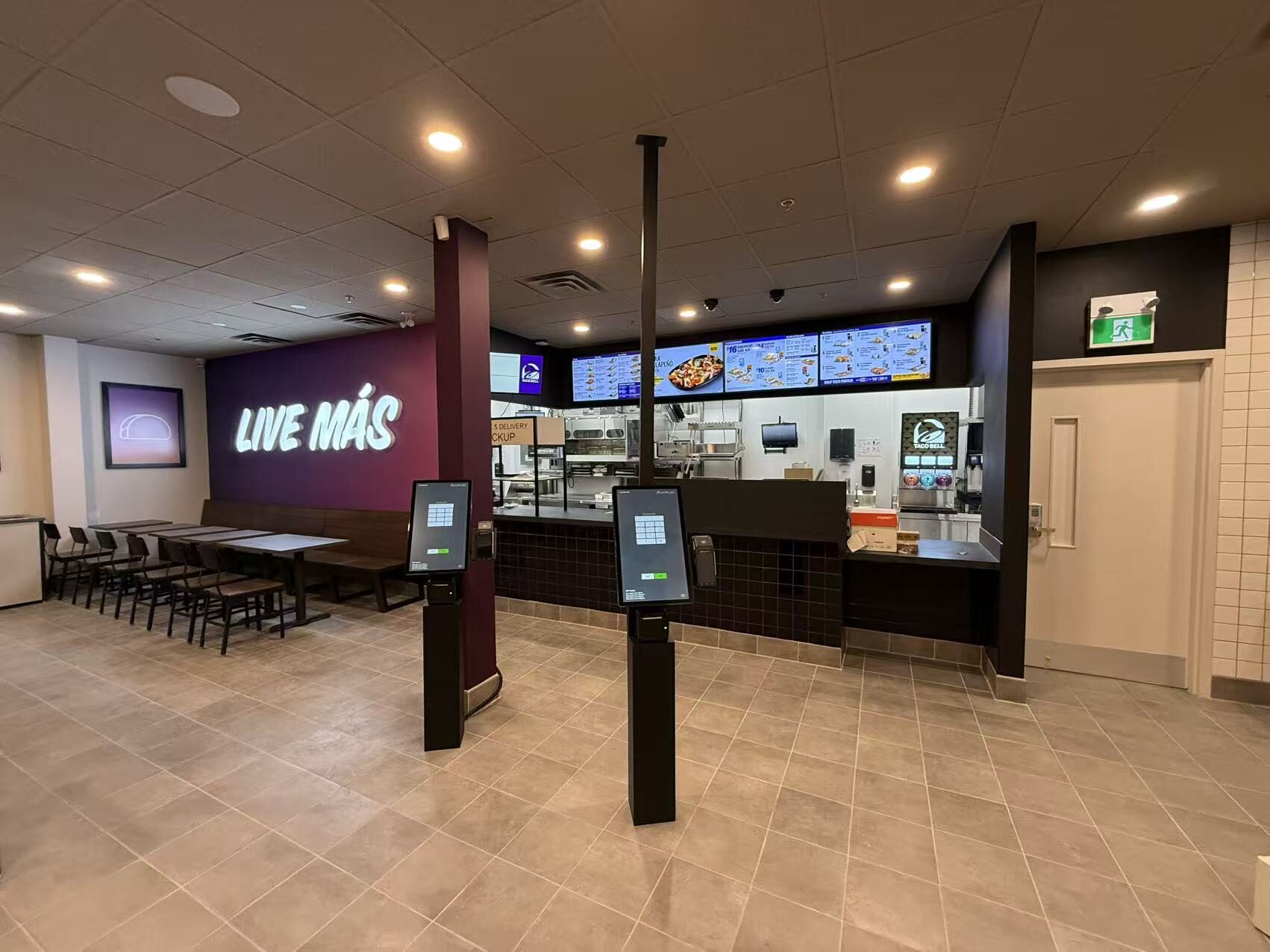
Quick-service / refresh — typically $70–120/sf turnkey. A franchise re-skin or takeaway counter dropped into a former food-use space with a re-certifiable hood. You're spending on finishes, signage, an equipment swap, and a small punch list. Construction is usually 6–8 weeks once your permit is in hand. Most QSR refreshes are six-figure projects, not seven.
Full-service casual — typically $180–300/sf turnkey. Reconfigured kitchen, full FOH refresh, banquettes, expanded dishpit. Often a second hood and a walk-in cooler relocation. Construction runs 8–12 weeks. We time-box this tightly because every week of construction is a week of rent without revenue.
Hotpot, BBQ, dim sum, and table-cooking concepts — start around $300/sf and run higher with concept density. These are projects where the fresh-air supply is the hero, not the dining room. Per-table cooking needs both fresh air and exhaust at every seat, plus a main grease hood for the back kitchen. We've worked on hotpot mechanical scopes and bring the ventilation engineer in early so the budget holds — see our hotpot restaurant construction guide for the mechanical detail.
Fine dining or bar-forward — $400/sf and up. Custom millwork, specialty lighting, glass and stone, often a chef's table window. The cost premium is finish quality and a longer punch list before opening.
These are planning anchors, not Buildup quotes. Your real number lives in a line-item proposal for your specific lease, concept, and space.
The single largest variable in your build-out budget is what was there before you. Here's the honest comparison.
When the previous tenant left a working food-use space, you can inherit real money:
Inheritance only pays out when the previous tenant's concept is close to yours. Watch for these patterns where the bones don't transfer:
A bare retail shell — drywall, sealed concrete, an empty service panel — sounds expensive, and often is. But it has two real advantages:
For high-end concepts and concepts that don't share much DNA with the previous tenant, a clean shell sometimes ends up cheaper than a "free" restaurant fit-out you have to undo.
If you only have one screen to scan, scan this. These are the line items where a few thousand dollars of upfront thinking saves tens of thousands later.
When operators bring us a quote from another contractor for a second opinion, these are the items most often missing or underbuilt:
When your quote doesn't list these, the number's going to grow during the project. When you see a Buildup proposal, they're already in.
Permits are submitted by your architect or permit consultant in parallel with our construction prep. They're not on Buildup's clock, but the timeline matters because construction can't start until the permit is issued. Most GTA cities run plan review in 4–7 weeks for restaurant TI when the architect submits a clean package; even projects that take a couple of submission rounds usually land in 5–7 weeks total.
Toronto. Building permit, electrical sign-off (ESA), gas sign-off (TSSA), plus engineering drawings. On larger projects, the architect can book a pre-application meeting with the city, which often saves time on the back end.
Mississauga and the rest of Peel. Generally moves at a steady pace. Region of Peel grease and sewer rules are stricter than some operators expect, so we confirm interceptor sizing against your equipment list on the site walk before plumbing plan review.
Vaughan, Markham, Richmond Hill. Markham is rigorous on accessible-washroom layouts for new restaurant work; the architect should carry the barrier-free layouts in the first submission rather than respond to comments later.
For the city-by-city detail, see our GTA restaurant permit timelines comparison and our restaurant build-out timeline from lease to opening.
Run through this before you sign anything. It takes 30 minutes on site and saves real money.
When we walk a space with you, bring as much of this as you have — it's the difference between a rough range and a usable number.
If you're comparing proposals from multiple contractors:
Q: I want hotpot — what's a realistic 2026 budget for a 1,800 sf space in Markham? A: Hotpot kitchens in this size range typically start in the high six figures, depending on whether the previous tenant was a food-use space and how much fresh-air capacity the unit can give you. Tell us the unit you're looking at and we'll come walk it.
Q: Does a former Tim Hortons or Starbucks save me real money for a different concept? A: Often yes — the hood, grease trap, and many plumbing rough-ins are inheritable. Some equipment-specific upgrades will be needed if your cooking is hotter or wetter than the previous tenant's, but the bones save weeks and tens of thousands. Walk it with a contractor before deciding.
Q: Can I use my existing 100A panel for a small QSR? A: For a takeaway counter with a fryer, panini press, and reach-in refrigeration only, often yes. Add load and we run a calc to confirm. Better to know before equipment purchase than after.
Q: How much can I push the landlord for in TI allowance? A: It varies widely by landlord and location. Mall landlords sometimes give significant cash TI — we've seen $200,000+ on some bubble tea deals in mall units. Plaza TI is more case-by-case. If cash TI is capped, free-rent months are sometimes more valuable for cash flow in the opening months. We cover the negotiation patterns in our lease and work-letter guide.
Q: Do I need an architect for a small refresh? A: For a building permit in Ontario, yes — drawings stamped by an architect are part of any meaningful TI scope. Cosmetic-only work that doesn't change exits, plumbing, or fire-rated walls can sometimes proceed without one, but those are edge cases for restaurants.
Q: What's the timeline from lease signing to opening day for a typical full-service? A: Once permit drawings are issued, our construction window is 8–12 weeks for full-service casual, plus 1–3 weeks for final-inspection sign-offs. Permit time runs in parallel with our pre-construction prep — typically 4–7 weeks across the GTA when the architect submits clean. Lease-to-opening usually runs 14–18 weeks total.
Q: Can I act as my own general contractor to save money? A: A few experienced operators do it well. Most first-time owners spend more in time and rework than they save on the contractor's fee, and they take on every permit and trade-coordination risk personally. Worth comparing the math both ways before deciding.
Q: Will the city require me to upsize the existing grease interceptor? A: It can happen — either at plumbing plan review or when the plumbing inspector walks the rough-in. The city sizes the interceptor based on how much greasy water your kitchen will produce, which comes off your equipment list. The rules are stricter in Peel region than some operators expect. We do that sizing math at the proposal stage — far cheaper than reworking it mid-construction.
The ranges above are planning anchors; your number is the proposal we write for your specific space, concept, and lease. Send us the address, your menu and equipment list, the lease draft, and any photos you have. We'll come back with a real range and walk the space if it's a fit. Tell us about your project — free site walk across Toronto and the GTA, and a written scope and price inside one business day.
If you're earlier in the process, our restaurant construction page for the GTA shows the kinds of projects we run, our pre-construction and permit coordination service covers what we do before the build starts, and our project experience page and FAQ answer most of the questions operators bring us before lease signing.
This article is for planning purposes only. Cost, timeline, permit, code, gas, grease trap, public health, and accessibility requirements vary by project scope, municipality, landlord, site condition, engineering, equipment list, and current trade and supplier availability. Confirm specific requirements with the municipality, architect, engineer, landlord, public health unit, fire reviewer, AGCO, registered or certified fuels contractor, electrical contractor, or other applicable authorities.
4.9 on Google
Every review from a GTA operator we built for
“BuildUp handled the full build-out of our restaurant and I honestly couldn't have asked for a smoother process. Lev understood from day one how important it was to open on schedule, and he kept everything moving — permits, inspections, the kitchen, the dining area — without me having to chase anyone.”
Kamesh Parcha · via Google
What happens when you get in touch
You deal with Lev directly. He does the site walk and writes the scope — not a salesperson who hands you off.
A written scope and a first read on budget within one business day.
Nothing is booked or billed until you say so. The site walk is free anywhere in the GTA.
WSIB clearance · $5M commercial liability · 1-year workmanship warranty · Mon–Fri 8am–6pm
Free · one business day
Three questions. We come back with a preliminary scope and a first read on budget within one business day — plus a free site walk anywhere in the GTA if it makes sense.
Prefer to talk? Call 647-477-7999. WSIB clearance and $5M commercial liability insured · 1-year workmanship warranty.
Planning a build-out
Buildup Contracting builds offices, retail stores and restaurants across the Greater Toronto Area — permits, trades and inspections on one contract, with a written scope and a first read on budget within one business day of the site walk.
Restaurant constructionRetail fit-outsOffice and commercial TIFranchise and multi-unitLandlords and property managers
Building in a specific city? These pages cover the local approvals, the departments that review them, and what usually moves the schedule there.
More of the research we use to scope real projects:
Commercial kitchen design mistakesChoosing a restaurant contractorOffice fit-out costs in TorontoBubble tea shop build-outsLease-to-opening checklistChoosing a renovation contractorAll guides
Send us the unit address, approximate square footage and your concept. We walk the space for free, then send a written scope and a real price range — no obligation.