Published: April 25, 2026 · Last reviewed: April 2026 · Reviewed by: Buildup Contracting Pre-Construction Team · Service area: Toronto & GTA
Planning numbers, not a quote — your space and your municipality decide the specifics. Full notes at the end of this guide.
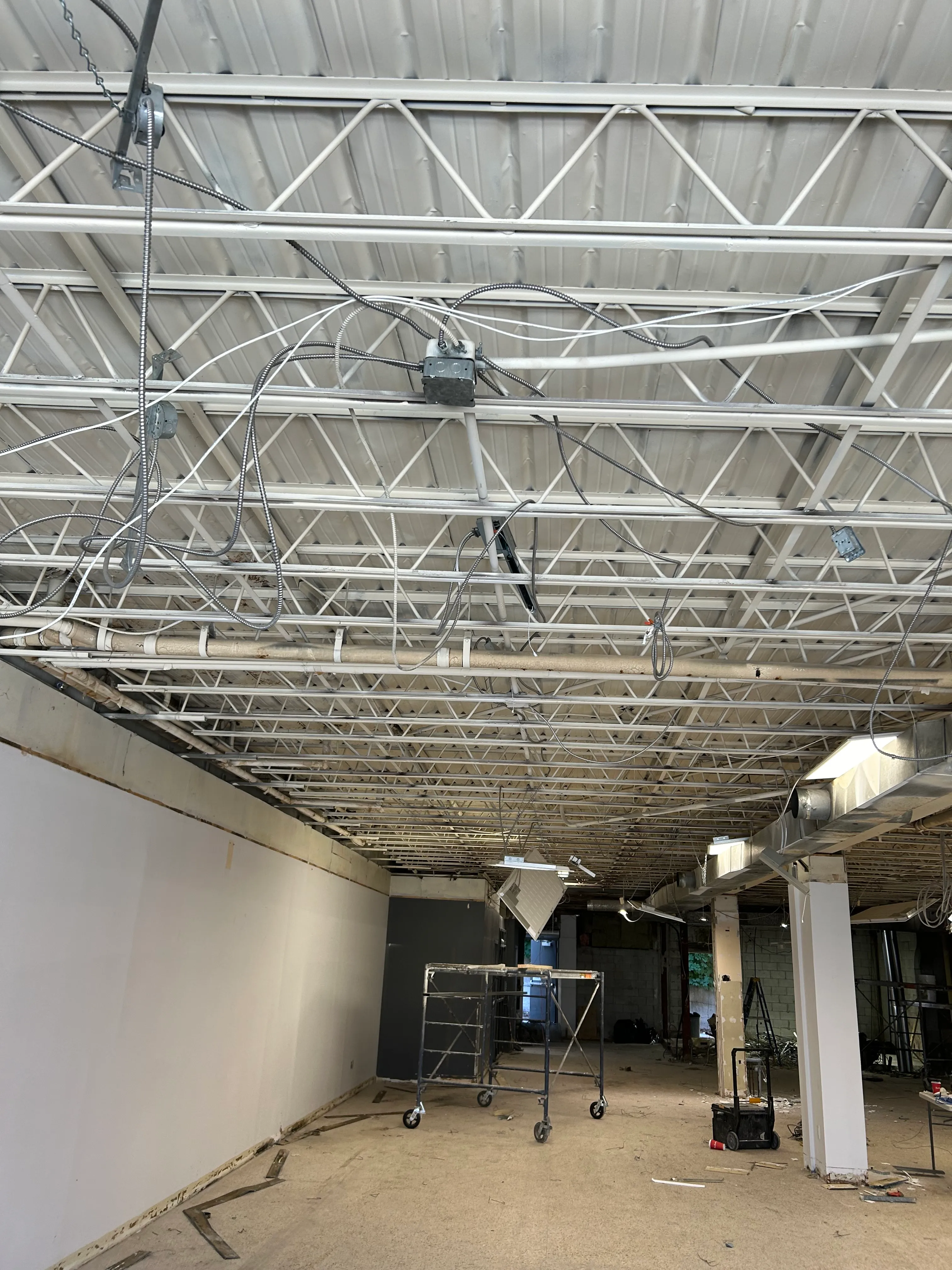
Before you sign, get a contractor on a site walk with the lease draft in hand. A 30-minute walk can flag five-figure surprises in mechanical, structural, or work-letter scope you didn't know to negotiate.
Most operators arrive at the lease with a lawyer reviewing the legal terms and nobody reading the construction implications — that's where the budget hits land. (Quick note: this article is construction planning guidance from a contractor's perspective, not legal advice. Lease language varies by landlord and market. Review your specific lease terms with a commercial real-estate lawyer before signing.)
This is the contractor's lens on a Toronto or GTA restaurant lease: what the build-out cost depends on, which lines in the work letter quietly push thousands onto your side of the ledger, and which hidden clauses your contractor should flag before pen meets paper. The goal is to walk into the negotiating table with a clear picture of mechanical capacity, construction risk, and a checklist your contractor and lawyer can divide between them.
In this guide: the pre-lease site walk · the work letter · TI allowance · mechanical capacity · the hidden clauses that hit your budget.
Once the offer-to-lease is signed, leverage drops fast. The window where you can still push back on landlord-delivered scope, the tenant improvement allowance (TIA), or a restoration clause is the few days between term sheet and signature.
Buildup runs a complimentary pre-lease site walk for restaurant operators in Toronto, Mississauga, Vaughan, Markham, Richmond Hill, Brampton, and Oakville. We walk the leased space with the term sheet open and call out the mechanical, structural, and code items that should be the landlord's cost — not yours — and the items the work letter quietly leaves to the tenant.
That's the same workflow we follow on our pre-construction and permit coordination service, just earlier in the deal. You can also see the kinds of restaurant TI work we've coordinated across the GTA on our project experience page.
Want the real number for your unit?
Free site walk across Toronto & the GTA — you get a written scope and budget range within one business day.
Get a build-out estimate → or call 647-477-7999This is the short version of the construction-side prep you (or your contractor) should run before signing. Keep it on a single page next to your lawyer's checklist:
Hand items 2, 3, 4, 7, 8, and 9 to your contractor. Hand items 5 and 6 to your lawyer and broker. Item 1 is the gateway that makes the rest possible.
The work letter (sometimes split into "landlord's work" and "tenant's work" schedules) lists what the landlord delivers to you on day one and what you pay for. This is where most restaurant operators absorb five-figure surprises in mechanical, structural, or work-letter scope they didn't know to negotiate.
A landlord with a vanilla-shell unit on a strong corner will hand over very little. A landlord with a stale unit and a vacancy problem will deliver more, faster — if you ask. Either way, the goal of your contractor reading the work letter is to translate every line into a build-out dollar figure, then push the lines that should be landlord scope back to the landlord.
That last one is the single most common ambush in restaurant work letters. If the lease says "tenant is responsible for ventilation" but the route to roof isn't drawn, you can be on the hook for a chase through a tenant on the floor above, plus their landlord-coordinated downtime.
For a deeper read on how these line items roll up into a real build-out budget, our restaurant build-out cost guide for Toronto in 2026 breaks the same scope into $/sf ranges by concept.
The TIA is cash the landlord contributes to your build-out. TIA varies widely. Plaza TIA can be modest and is largely case-by-case; mall landlords sometimes go significantly higher to land an anchor concept. Tired plazas with vacancy problems sometimes go higher to land a strong operator; brand-new developments lean toward whatever number gets you to sign. Push for the highest cash you can; if cash is capped, ask for free-rent months at opening.
What your contractor should help you push for, beyond the headline number:
A practical rule: free-rent months are often more valuable than a small cash TIA, because they help you survive the slow opening months. If the landlord won't go higher on cash TIA, ask for two or three months of free rent at opening — and model both scenarios against your cash flow before signing.
This is the section that, if the term sheet is silent, defaults to "tenant's problem." Your contractor's job at the pre-lease walk is to confirm capacity for each system, photograph what's there, and price the upgrade if there's a gap. The figures below are industry-typical planning ranges to give you a sense of magnitude. Your contractor's site walk gets you a real number for your specific unit.
If any of these need upgrading, negotiate who pays. Sometimes the landlord funds it directly; sometimes you take a credit against rent over the first 12 months; sometimes the answer is that the unit isn't right for your concept and you should walk. Better to know now than at month two of construction.
The legal team will read these for legal effect. Your contractor reads them for build-out and operating consequence. Both reads are needed.
What it is: A clause that requires you to remove all of your improvements at lease end — kitchen, hood, finishes, sometimes even the slab work — and return the space to base building condition.
How it affects build-out scope or cost: Restoration on a full-service restaurant can run into the high five or low six figures. If the lease has a broad restoration clause, you're effectively pre-paying for a second demolition on the back end of a 5–10 year deal.
What to push for: Negotiate the clause out, cap it at a defined dollar amount, or limit it to specific items (e.g., "remove the hood and patch the roof; everything else stays for the next tenant"). Document existing conditions in a photo schedule attached to the lease.
What it is: Clauses that give you the right to terminate or pay reduced rent if anchor tenants leave or the plaza occupancy drops below a threshold.
How it affects build-out scope or cost: Without one, you're locked into the build-out cost even if the foot traffic that justified your rent disappears.
What to push for: A right to reduced rent (or termination) if the named anchor tenant vacates or if center occupancy drops below a stated percentage for a defined period.
What it is: Landlord agreement not to lease to a directly competing concept in the same property.
How it affects build-out scope or cost: If the landlord later adds a competing tenant with shared exhaust or shared waste, your mechanical assumptions can change — and your shared-system cost allocation can change with them.
What to push for: Concept-level exclusivity ("no other Korean BBQ") or cuisine-level exclusivity ("no other Asian quick-service"). Landlords resist broad language but often accept narrower.
What it is: CAM charges cover the landlord's shared costs — snow removal, parking, common-area utilities, and increasingly, large capital projects amortized over the tenants.
How it affects build-out scope or cost: CAM doesn't hit construction directly, but uncapped CAM can erode the operating margin you priced your build-out against.
What to push for: A defined annual cap (single-digit percentage growth), an exclusion for capital expenditures, and audit rights. Ask whether the building's rooftop HVAC servicing is in CAM and what condition those units are in.
What it is: Plaza-level rules that restrict late-night operation, restrict cooking after a certain hour, or limit grease delivery and pickup windows.
How it affects build-out scope or cost: None directly on build-out, but if your concept is a late-night ramen counter or a hotpot operator with table-side cooking, these rules can quietly kill the revenue model you sized the build-out for.
What to push for: Read the rules-and-regulations schedule, not just the main lease — that's where these usually live. Negotiate carve-outs in writing for your concept's hours and grease pickup windows. We see this often on hotpot deals, which is why our hotpot restaurant construction guide calls out lease-level vetting upfront.
What it is: A clause where you personally guarantee the lease — meaning if the corporation defaults, the landlord can come after your personal assets.
How it affects build-out scope or cost: The build-out itself is often the corporation's biggest asset, and a long personal guarantee combined with a long restoration clause is double exposure on the same construction dollars.
What to push for: Your lawyer leads this conversation. Common asks are a burn-down (PG reduces over time), a cap on dollar exposure, and a "good guy" guarantee that releases you if you hand back the keys cleanly.
What it is: A clause that lets the landlord terminate early if they want to redevelop the property.
How it affects build-out scope or cost: If the landlord exercises this in year three, your six-figure build-out walks with the building.
What to push for: Notice period (12+ months is reasonable), relocation cost coverage, and ideally a pro-rated buyout of your unamortized improvements. Your contractor can help quantify the buyout number against the original build-out spend.
This is the working list we run through on a Buildup pre-lease site walk:
This is a 30–60 minute walk for a contractor who has done dozens of restaurant TIs. The output is a one-page "what the lease should cover vs. what you'll pay for" summary you can hand to your lawyer for negotiation.
A few habits that separate operators on their second restaurant from operators on their first:
For a fuller view of how the lease shapes the path from signing to opening night, see our build-out timeline from lease to opening.
Q: How much TIA can I push for in a Toronto plaza in 2026? A: TIA varies widely. Plaza TIA can be modest and is largely case-by-case; mall landlords sometimes go significantly higher to land the right concept. Push for the highest cash you can if the unit has been vacant more than six months, if your build-out is heavy on kitchen scope, or if you're committing to a long term. If cash TIA is capped, ask for two or three months of free rent at opening — that's often more valuable for cash flow.
Q: What if the work letter says I have to use the landlord's HVAC contractor? A: That's a common clause and not always negotiable, but you should at minimum get a quote from the landlord's contractor and one independent quote so you know what you're paying. Landlord-mandated trades can come in materially over market. If the spread is large, push to add language allowing you to use your own licensed contractor with the landlord's approval not unreasonably withheld.
Q: Should I pay for an electrical capacity test before signing the lease? A: Yes, if your concept needs heavy electric cooking equipment and the existing panel looks light. A capacity test is a few hundred dollars and you do it before signing; an unfunded panel upgrade discovered at month two of construction is a much bigger five-figure problem.
Q: The landlord is offering "vanilla shell." What does that actually mean for my build-out? A: Vanilla shell typically means demising walls, basic HVAC, basic electrical service, and a polished or sealed concrete floor — but it almost never means kitchen-ready. Restaurant build-outs from vanilla shell still need full mechanical, exhaust, plumbing rough-ins, fire suppression, and finishes. Confirm the work-letter definition line by line.
Q: My restoration clause says I have to remove all improvements at lease end. Is that standard? A: It's common but heavily negotiable. The default landlord ask is total removal; a reasonable middle ground is removal of items the next tenant likely won't want (the hood and exhaust, sometimes the grease trap) and acceptance of everything else as-is. Cap the dollar exposure if you can't get the clause out entirely, and confirm specifics with your lawyer.
Q: Do I really need a contractor at the lease walk, or can my architect handle it? A: An architect catches the design and code-compliance items; a contractor catches the cost and constructability items. They're complementary, not substitutes. If you can only bring one to the lease walk, bring the contractor — you can design the layout later, but you can't unwind a lease that priced your build-out at twice your budget.
Q: How early should I bring a contractor in? A: Before the offer-to-lease is signed, ideally during the broker tour. Once the offer is signed, the contractor's findings become a renegotiation conversation, not a clean push on the term sheet. See our FAQ page for more on how Buildup engages with operators across the deal-to-construction handoff.
Q: Does Buildup charge for the pre-lease site walk? A: No. The pre-lease walk is complimentary for operators who are evaluating a real space in our service area. The deliverable is a one-page risk summary and a rough $/sf range for the build-out, which you can use in negotiation.
This article is construction planning guidance from a contractor's perspective, not legal advice. Lease language varies by landlord and market — review your specific lease terms with a commercial real-estate lawyer before signing. On the construction side, here's the offer:
Before you sign the lease, send us the unit address and the lease draft. We'll do a 30-minute walk and identify mechanical, structural, and work-letter risks that could blow up your build-out budget. Call 647-477-7999, email info@buildupcontracting.ca, or use the contact form to book a pre-lease site walk and mention "pre-lease walk."
For operators specifically opening in our core service zones, our restaurant construction page for the GTA covers the build-out side of the work once the lease is in place.
This article is for planning purposes only. Cost, timeline, permit, code, gas, grease trap, public health, and accessibility requirements vary by project scope, municipality, landlord, site condition, engineering, equipment list, and current trade and supplier availability. Confirm specific requirements with the municipality, architect, engineer, landlord, public health unit, fire reviewer, AGCO, registered or certified fuels contractor, electrical contractor, or other applicable authorities.
4.9 on Google
Every review from a GTA operator we built for
“BuildUp handled the full build-out of our restaurant and I honestly couldn't have asked for a smoother process. Lev understood from day one how important it was to open on schedule, and he kept everything moving — permits, inspections, the kitchen, the dining area — without me having to chase anyone.”
Kamesh Parcha · via Google
What happens when you get in touch
You deal with Lev directly. He does the site walk and writes the scope — not a salesperson who hands you off.
A written scope and a first read on budget within one business day.
Nothing is booked or billed until you say so. The site walk is free anywhere in the GTA.
WSIB clearance · $5M commercial liability · 1-year workmanship warranty · Mon–Fri 8am–6pm
Free · one business day
Three questions. We come back with a preliminary scope and a first read on budget within one business day — plus a free site walk anywhere in the GTA if it makes sense.
Prefer to talk? Call 647-477-7999. WSIB clearance and $5M commercial liability insured · 1-year workmanship warranty.
Planning a build-out
Buildup Contracting builds offices, retail stores and restaurants across the Greater Toronto Area — permits, trades and inspections on one contract, with a written scope and a first read on budget within one business day of the site walk.
Restaurant constructionRetail fit-outsOffice and commercial TIFranchise and multi-unitLandlords and property managers
Building in a specific city? These pages cover the local approvals, the departments that review them, and what usually moves the schedule there.
More of the research we use to scope real projects:
Commercial kitchen design mistakesChoosing a restaurant contractorOffice fit-out costs in TorontoBubble tea shop build-outsLease-to-opening checklistChoosing a renovation contractorAll guides
Send us the unit address, approximate square footage and your concept. We walk the space for free, then send a written scope and a real price range — no obligation.