Published: April 25, 2026 · Last reviewed: April 2026 · Reviewed by: Buildup Contracting Pre-Construction Team · Service area: Toronto & GTA
Planning numbers, not a quote — your space and your municipality decide the specifics. Full notes at the end of this guide.
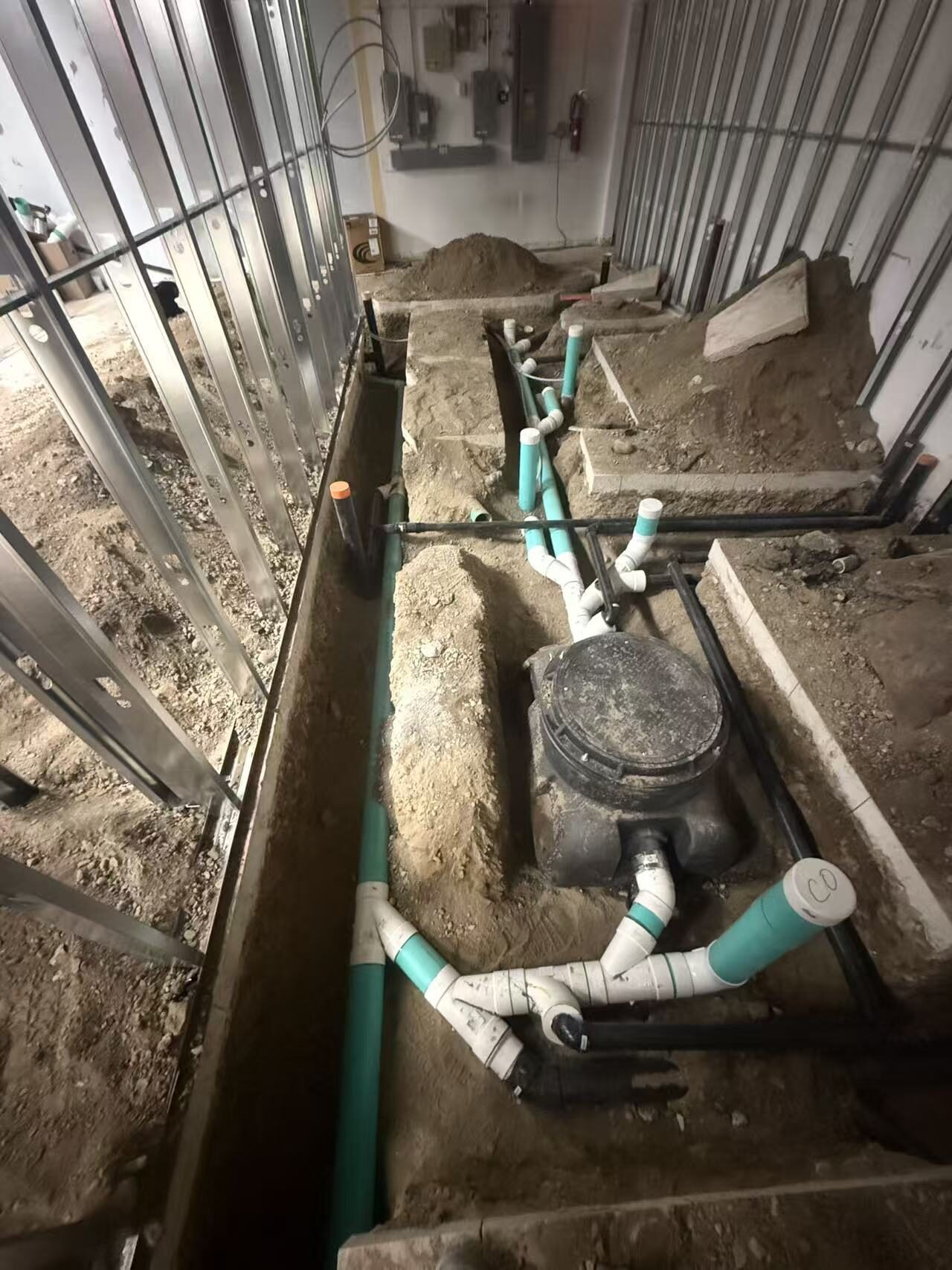
If you are sizing a grease trap for a Toronto or GTA restaurant, the two questions that matter on day one are whether you need an under-counter trap or an in-ground tank, and what that is going to cost. For most projects, internal under-counter traps install from around $2,000; in-ground grease tanks typically run $25,000 to $60,000 once you include cutting and re-pouring concrete, excavation, and the tank itself. These are planning estimates that vary by site condition, supplier, market, and trade availability.
This article is a planning guide, not a substitute for municipal sewer-use requirements or professional sizing — we coordinate the actual numbers with the mechanical engineer and the city's plumbing reviewer at the proposal stage so the trap does not blow up your budget mid-construction.
In this guide: internal trap vs in-ground tank · sizing in plain English · 2026 costs · what the inspector checks · maintenance.
The price gap between an internal trap and an in-ground tank is the single biggest budget swing on the plumbing side of a restaurant build-out. Get the answer wrong at lease signing and you can lose $30,000 to $50,000 of margin to slab cutting and excavation that you never priced in. Get it right and the trap becomes a line item, not a crisis.
Most operators only find out which one they need after the mechanical engineer reviews the equipment list. That is why we walk the space with you before the lease is signed — the pre-construction permit coordination work happens at the proposal stage, when changing the math is still cheap.
Want the real number for your unit?
Free site walk across Toronto & the GTA — you get a written scope and budget range within one business day.
Get a build-out estimate → or call 647-477-7999The decision is driven by how much greasy water your kitchen produces and where the city's plumbing reviewer will let you put the equipment.
A small quick-service spot with one prep sink and a single fryer can almost always run an internal under-counter trap. A full-service kitchen with a three-compartment sink, dishwasher, pot wash, and a couple of floor drains in the cooking zone usually needs an in-ground grease tank outside the building or in the basement.
Quick rule of thumb on a site walk: if your connected fixtures push more than about 75 gallons-per-minute of drain flow, plan for an in-ground tank. Below that, an internal trap is usually accepted, and you save the excavation cost.
We coordinate the trap selection with the mechanical engineer and the city's plumbing reviewer before drawings get stamped. That is the cheapest moment to catch a problem — the trade coordination work we do at this stage is what keeps the trap from becoming a mid-construction surprise.
Drain flow capacity is measured in gallons per minute — how much greasy water moves through the trap at peak. The bigger your kitchen, the higher the gallons-per-minute rating you need. The provincial plumbing code uses a sizing method based on drainage units (sometimes called fixture flow), which the engineer multiplies by a factor to land on the right size.
Here is what we typically spec, by concept type:
Hand sinks and mop sinks generally do not get connected to the trap. The cooking-side floor drains, the three-compartment sink, the pot wash, the wok station drain, and the dishwasher discharge are what drive the size.
These ranges are planning observations from recent GTA work, not Buildup quotes — final numbers depend on site condition, supplier, slab type, and trade availability.
If your concept is a casual full-service or hotpot kitchen and the landlord will not accept an internal trap, the tank cost lands inside your overall build-out budget — see our restaurant build-out cost guide for Toronto in 2026 for how that fits into the bigger number. For hotpot specifically, where drain volume is unusually high, we cover the kitchen-mechanical realities in the hotpot construction breakdown.
When the plumbing inspector walks the site at rough-in and again at final, they look at four things on the trap:
A note on plumbing-permit timing: first review for a clean application is usually a few weeks in Toronto, but total plumbing-permit-in-hand can extend with resubmissions, mechanical coordination, or landlord approvals. Build that into the schedule rather than treating the first stamp as the finish line.
The City of Toronto's sewer rules cap how much grease can leave your building in the wastewater, and the inspector enforces that. Mississauga and Brampton operate under Region of Peel's grease and sewer rules; Vaughan, Markham, and Richmond Hill each have their own version. The size of trap that satisfies one city's reviewer will usually satisfy the others, but install details (location, venting, cleanout access) sometimes vary — see our Mississauga restaurant construction guide for Peel-specific differences.
Cleaning frequency and hauler manifests are operational realities, not paperwork you can skip. The public health inspector and the city's plumbing rules both expect to see records.
Toronto cleaning frequency: In Toronto, grease trap cleaning must follow the City's sewer-use requirements. The trap should be cleaned before grease and solids reach 25% of the trap's liquid volume, or every four weeks, whichever comes first, unless a specific permitted exception applies. Other GTA municipalities may have different sewer-use requirements, so restaurant owners should confirm with the local municipality and their grease hauler.
Manifests: the licensed grease hauler issues a manifest each visit showing where the waste went; you keep them on file. Missing manifests are the easiest way to fail a routine inspection.
A trap that gets skipped on cleaning emulsifies — hot dishwasher water mixes the grease back into the water and it leaves the trap, which both fails the city's discharge limits and clogs your plumbing downstream.
These are things our pre-construction team flags before the trap goes into the drawings, not after:
For more on how trades line up at this stage, our project experience page shows the kind of restaurant work we coordinate end-to-end.
For the broader permit and approval picture, our restaurant permits guide for 2026 walks through who reviews what.
Q: Can I put an in-ground grease tank in the basement of a Toronto restaurant? A: Sometimes — it depends on slab capacity, ceiling height, and access for the pump truck hose. The city's plumbing reviewer will check that it is vented and accessible. We get the structural engineer to confirm slab work before quoting.
Q: Do I need a grease trap for a bubble tea or coffee shop? A: Usually a small internal trap, yes. Even no-cook concepts produce some grease from milk, syrups, and rinse water, and the city's plumbing rules apply broadly. The trap is small (around 20 gallons-per-minute) and inexpensive relative to the rest of the build-out.
Q: How big a trap does a hotpot restaurant need? A: Hotpot drives heavy drain volume and grease load — most hotpot kitchens need an in-ground tank in the 500 to 1,000 gallon range. We size with the engineer based on station count and broth volume; see our hotpot construction breakdown for the wider mechanical picture.
Q: How often does the trap actually need to be cleaned in Toronto? A: In Toronto, the trap must be cleaned before grease and solids reach 25% of its liquid volume, or every four weeks, whichever comes first, unless a specific permitted exception applies. Other GTA municipalities may have different requirements — confirm with your municipality and grease hauler.
Q: What happens if my trap is undersized? A: Backups within months of opening, gurgling drains, and grease leaving the building above the city's allowed limit. Fines can be significant, and the fix is replacing the trap — far more expensive than sizing it right at the proposal stage.
Q: Are bacterial additives allowed to reduce cleaning frequency? A: No — Toronto's sewer-use requirements prohibit additives that delay grease separation, because they let grease pass through into the sewer. Mechanical separation is the accepted method.
Q: Does the kitchen exhaust system affect grease trap sizing? A: Not directly — the hood handles airborne grease, the trap handles waterborne grease. But a heavy-cooking kitchen typically has both, and we coordinate them together. Our commercial kitchen ventilation guide covers the hood side.
Q: Who is responsible for the grease trap — landlord or tenant? A: Usually the tenant installs and maintains it as part of the fit-out, but base-building plumbing capacity is the landlord's. If the landlord did not bring sufficient drain capacity to the suite, that is a base-building deficiency worth pushing on in the work letter. See our FAQ page for more on lease and TI patterns.
We do the trap math with the engineer before you sign the construction contract, so the cost is locked in and the inspector signs off on first try. If you are planning a restaurant in Toronto, Mississauga, Vaughan, Markham, Richmond Hill, Brampton, or Oakville, book a kitchen plumbing review with Buildup Contracting or call 647-477-7999 — we will walk the space, run the sizing, and give you a real number.
This article is for planning purposes only. Cost, timeline, permit, code, gas, grease trap, public health, and accessibility requirements vary by project scope, municipality, landlord, site condition, engineering, equipment list, and current trade and supplier availability. Confirm specific requirements with the municipality, architect, engineer, landlord, public health unit, fire reviewer, AGCO, registered or certified fuels contractor, electrical contractor, or other applicable authorities.
4.9 on Google
Every review from a GTA operator we built for
“BuildUp handled the full build-out of our restaurant and I honestly couldn't have asked for a smoother process. Lev understood from day one how important it was to open on schedule, and he kept everything moving — permits, inspections, the kitchen, the dining area — without me having to chase anyone.”
Kamesh Parcha · via Google
What happens when you get in touch
You deal with Lev directly. He does the site walk and writes the scope — not a salesperson who hands you off.
A written scope and a first read on budget within one business day.
Nothing is booked or billed until you say so. The site walk is free anywhere in the GTA.
WSIB clearance · $5M commercial liability · 1-year workmanship warranty · Mon–Fri 8am–6pm
Free · one business day
Three questions. We come back with a preliminary scope and a first read on budget within one business day — plus a free site walk anywhere in the GTA if it makes sense.
Prefer to talk? Call 647-477-7999. WSIB clearance and $5M commercial liability insured · 1-year workmanship warranty.
Planning a build-out
Buildup Contracting builds offices, retail stores and restaurants across the Greater Toronto Area — permits, trades and inspections on one contract, with a written scope and a first read on budget within one business day of the site walk.
Restaurant constructionRetail fit-outsOffice and commercial TIFranchise and multi-unitLandlords and property managers
Building in a specific city? These pages cover the local approvals, the departments that review them, and what usually moves the schedule there.
More of the research we use to scope real projects:
Commercial kitchen design mistakesChoosing a restaurant contractorOffice fit-out costs in TorontoBubble tea shop build-outsLease-to-opening checklistChoosing a renovation contractorAll guides
Send us the unit address, approximate square footage and your concept. We walk the space for free, then send a written scope and a real price range — no obligation.