Published: April 25, 2026 · Last reviewed: April 2026 · Reviewed by: Buildup Contracting Pre-Construction Team · Service area: Toronto & GTA
Planning numbers, not a quote — your space and your municipality decide the specifics. Full notes at the end of this guide.
If you just signed a lease in Toronto, Mississauga, Vaughan, or anywhere in the GTA, the question that decides your opening date isn't "what's my construction schedule?" It's "what equipment did I order on day one, and what slipped to week eight?"
Custom hoods, walk-ins, and millwork are the three items that decide whether you open on time. Order them at lease-signing. Standard ranges, fryers, and reach-ins can wait until the building permit issues. Lead times in this article are planning estimates from typical 2026 GTA experience. Actual ETAs vary by supplier, manufacturer, model, finish/spec choices, and current market conditions — confirm specific lead times with your supplier or kitchen-equipment dealer at the time of order.
The rest of this article walks through the procurement schedule we use, what we put on the equipment list before demo, and the risks that catch operators off guard. Buildup maintains the equipment schedule with order dates and ETAs as part of project management; we pre-order long-lead items the day the contract is signed when our schedule supports it. See how we run project management for the full picture.
In this guide: what to order at lease signing · the procurement schedule · how late changes hit permits · specialty equipment · a one-week action checklist.
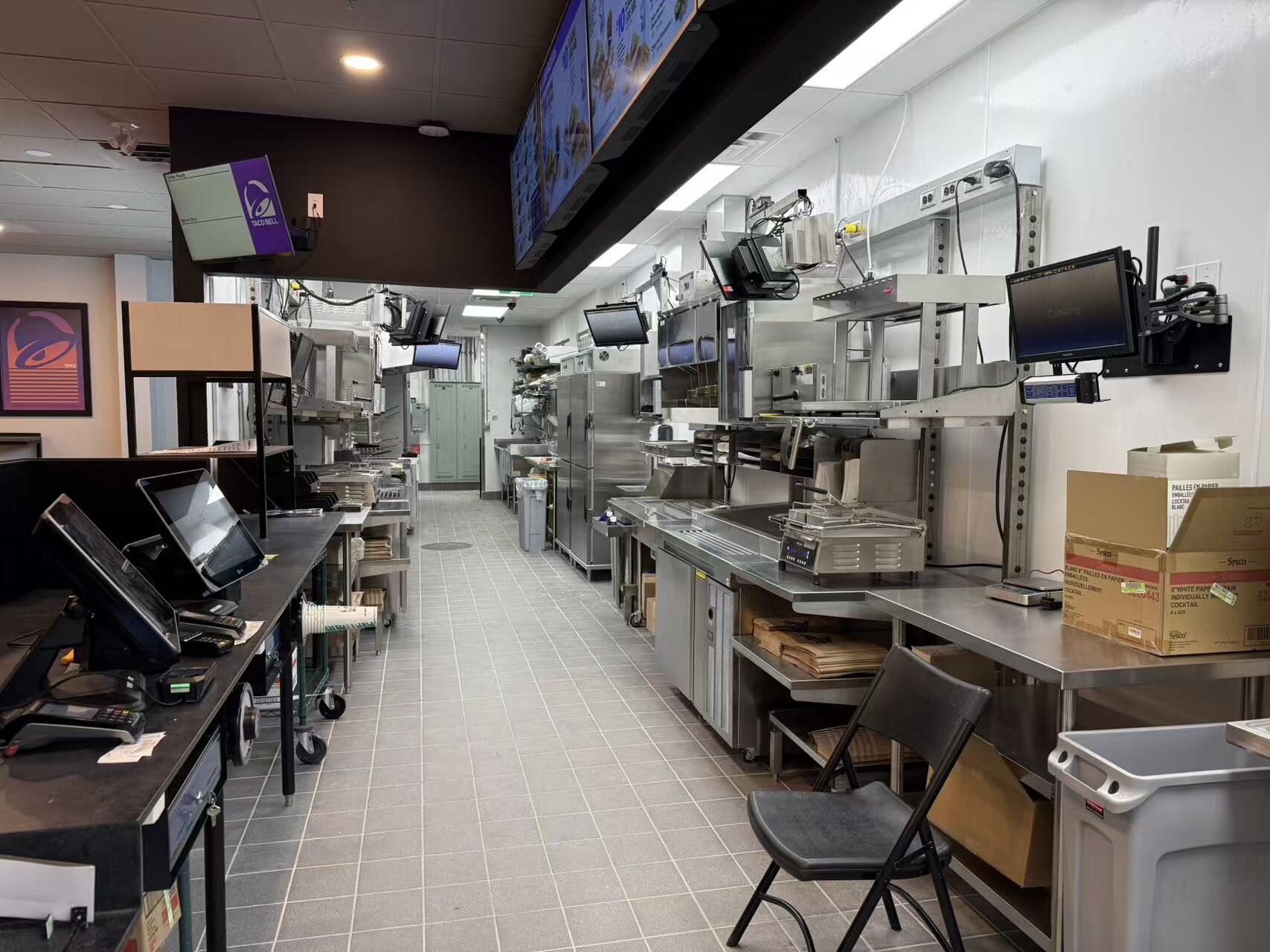
Equipment is not a "we'll figure it out during construction" line item. The equipment list drives the mechanical drawings, which drive the permit, which drives the construction start. If the equipment list moves after the drawings are stamped, the schedule moves with it. Most missed opening days we see come from one of three places: a custom hood ordered too late, a sign permit applied for too late, or an equipment substitution that triggered a permit resubmission.
The lever you have is sequencing — what gets ordered when, against what trigger event. The rest of this article is that sequence.
Want the real number for your unit?
Free site walk across Toronto & the GTA — you get a written scope and budget range within one business day.
Get a build-out estimate → or call 647-477-7999Lead times in this section are planning estimates from typical 2026 GTA experience. Actual ETAs vary by supplier, manufacturer, model, finish/spec choices, and current market conditions. Confirm specific lead times with your supplier or kitchen-equipment dealer at the time of order.
We organize procurement by trigger event, not by calendar week, because every project's calendar shifts. When the trigger fires, the order goes in.
At lease signing (week 0). This is the long-lead bucket. Every item here has a fabrication or shipping window long enough that waiting for permit-issue makes it the last thing on site:
At permit submission (weeks 2–3). Standard kitchen package goes in once the equipment list is locked and submitted with the mechanical drawings:
At permit issued / construction start (weeks 4–7). Items that need confirmed dimensions and a confirmed start date:
At drywall stage. The small stuff. Pulling these orders forward only creates a storage and inventory headache:
At final inspection. The last-mile items:
The full schedule, item by item, sits on one page in the equipment tracker we keep against every project — order date, supplier ETA, delivery window, on-site delivery date, install date.
Demo day is the visible start of construction, but it's not the start of the schedule. The orders below need to be in well before the wrecking bar swings, because they either drive the floor plan or have lead times longer than the build itself.
Custom grease hoods — 6 to 12 weeks lead time. The hood must be measured against the locked equipment list — you cannot order it until the kitchen layout is final and the cookline is signed off. That's why "lock the equipment list" is the first lever in any restaurant build. Once the hood is ordered, the rest of the mechanical design is downstream.
Walk-in coolers and freezers — 4 to 10 weeks. Standard modular walk-ins ship in 4–6 weeks; custom-sized walk-ins, non-standard ceiling heights, integrated refrigerated prep rooms, or remote condensing units stretch to 8–10 weeks. A custom-sized walk-in locks the floor plan — ordering it confirms your floor area allocation. If the walk-in moves after demo, the framing moves with it.
Custom millwork (bar, host stand, banquette frames) — 6 to 12 weeks. This is held up by finish selections more than fabrication. Wood species, stain, edge profile, hardware, stone tops — finalize the finish package alongside the floor plan, not after. Millwork fabrication can't begin until finishes are signed off, so a stalled finish board stalls the entire millwork timeline.
Branded signage — sign permit cycle 4 to 10 weeks PLUS fabrication 4 to 6 weeks. Channel letters, illuminated cabinets, projecting signs — all of these need a separate sign permit on top of the building permit. Signage is the most commonly under-ordered item in a restaurant build. Apply for the sign permit at lease signing.
The number of restaurants that open with a piece of vinyl taped to the window because the sign is still in fabrication is higher than it should be — and the fix is one form, two weeks earlier.
Specialty cooking equipment with import lead times. Tandoor (8–12 weeks), wood-fired pizza ovens from Italy (10–16 weeks), premium espresso machines (8–16 weeks). All of these can be the longest pole in your schedule. Order the week the lease is signed, and engage a customs broker before the equipment leaves the foreign port.
The path from equipment list to permit looks like this:
If the equipment list changes after the drawings are submitted, you trigger a permit resubmission. Each round of resubmission is roughly 1–3 weeks depending on the city and the reviewer's queue, and you may go through several rounds before the change is approved.
The lever: lock the equipment list before mechanical drawings are stamped, not after. Substitution-driven resubmissions are the avoidable schedule slip.
This is also why "we'll just substitute a different range" sounds harmless and isn't. A different range usually has a different gas BTU rating, different exhaust requirements, or a different physical footprint. Any of those can require a hood change, a make-up air change, a gas line resize, or a layout revision — each of which can pull the drawings back into engineering and back into permit review.
Custom equipment is where schedules slip. Here's the short list of what we plan around on every project:
Manufacturer scheduling slips. Custom millwork shops and custom hood fabricators run their own queues. A two-week slip at the shop is a two-week slip on site, and there's no way to compress installation to absorb it. The defense is to order early, hold check-in calls every 2–3 weeks, and have a credible plan B fabricator if the primary slips badly.
Imported equipment held up at customs. Tandoors from India or Pakistan, espresso machines from Italy, specialty wok ranges from China. Customs holds can run anywhere from a few days to several weeks, and you don't get a phone call before it happens. Engage a customs broker before the equipment ships, not after.
Substitution risk. When the model you specified isn't available — discontinued, back-ordered, manufacturer changed the spec — the substitution can change the equipment list. If that change happens after mechanical drawings are stamped, you're looking at drawing revisions and a permit resubmission. The defense is to confirm model availability before the equipment list is locked, not after.
Brand-mandated finishes and approved-vendor lists. If you're building a franchise concept, the corporate construction manager often requires approved-vendor materials and equipment. Verify the approved-vendor list before you order anything custom. Operators occasionally order from a non-approved vendor, save 10%, and then have to re-order from the approved list at full price plus the lost lead time.
Site access for delivery. Walk-in panels, custom millwork, and large hoods need a delivery path — door width, hallway width, freight elevator capacity, loading dock availability. Confirm site access measurements before custom items are fabricated, not when the truck arrives.
These are the items operators come to us asking about specifically because the lead times surprise them. Numbers below are 2026 planning estimates — confirm with your supplier at the time of order.
Tandoor ovens — 8 to 12 weeks, sometimes longer. Most tandoors are imported from India, Pakistan, or the UK; the long pole is shipping plus customs clearance, not manufacturing. We've seen tandoors clear in three weeks and we've seen them stuck in customs for six. If your concept needs a tandoor, place the order the week you sign the lease and have your customs broker lined up.
Hotpot induction tabletops. Branded units (CookTek, Buffalo, Garland induction) run 4–8 weeks. Generic Chinese-import units are 2–3 weeks but you accept warranty and parts-replacement risk that a 30-table operation does not want. Replacing a failed induction unit during dinner service is not a fun phone call.
Korean BBQ tabletop grills with downdraft ventilation — 6 to 10 weeks. The downdraft ducting is the long pole; the grills themselves are quick. The whole assembly has to be coordinated with the hood and floor trench locations, which is why we want this order placed before the mechanical engineer finalizes the layout. For more on which hood type your concept actually needs, see our hood and exhaust guide.
Specialty wok ranges (commercial Cantonese-style 3-burner / 5-burner) — 8 to 14 weeks if imported, 4 to 6 weeks for North American-built equivalents (Town Food, Garland). The price difference is usually worth it for service-call convenience in the GTA.
Pizza ovens. Brand-name conveyor ovens (Lincoln, Middleby, Picard) are 6–8 weeks if the dealer has stock allocation, longer if they don't. Wood-fired and specialty deck ovens (Marra Forni, Forno Bravo) are 10–16 weeks because most are built to order in Italy and shipped by sea.
High-end espresso machines. La Marzocco and Slayer are 8–16 weeks depending on the model and configuration. The longest pole is custom paint and dual-boiler builds.
For a concept-specific example of how we sequence this, our hotpot restaurant construction breakdown walks through it.
Patterns we see over and over on second-restaurant operators that first-time operators tend to learn the hard way:
This is the kind of schedule we run on every project — see how Buildup handles trade coordination and examples from past restaurant builds.
Q: I just signed my lease — what do I order this week? A: Custom hood, walk-in cooler/freezer, custom millwork, and any specialty oven (wood-fired, tandoor, high-end espresso). Also the sign permit application. Everything else can wait until the equipment list is locked and the permit is submitted.
Q: Can I substitute a stock hood for the custom one to save lead time? A: Sometimes — but only if your cookline fits a stock hood's dimensions and the engineer signs off on the air-balance numbers. For most hotpot, Korean BBQ, charcoal, or wok-heavy concepts, the answer is no. Talk to your ventilation engineer before you assume this is a shortcut.
Q: What happens if I change a piece of equipment after the permit is submitted? A: It depends on whether the change affects the mechanical drawings. A like-for-like substitute (same gas BTU, same footprint, same exhaust) usually doesn't. A change to BTU rating, footprint, or exhaust does, and triggers a permit resubmission of roughly 1–3 weeks per round. Lock the equipment list before drawings are stamped.
Q: My equipment dealer says everything is "in stock." Should I believe them? A: For commodity items (stock fryers, stock reach-ins, three-compartment sinks), usually yes. For custom hoods, walk-ins, millwork, and specialty equipment, "in stock" often means "we can get it" — which is not the same thing. Ask for the manufacturer name, the model number, and a written ETA. If they can't produce all three in 24 hours, treat it as not in stock.
Q: What if I'm doing a franchise build-out — does that change the equipment schedule? A: Yes. Franchise concepts usually have a single approved equipment supplier, brand-mandated finishes, and a brand-spec equipment package. Lead times are often longer because the brand-approved fabricator has their own queue. Verify the approved-vendor list before ordering anything, and get the equipment package and PO in the franchisor's hands the week you sign the lease.
Q: How do equipment lead times affect my overall opening timeline? A: A typical GTA restaurant build-out runs roughly 4–6 months from lease to opening, and the equipment schedule sits inside that. We've broken down the full sequence in our restaurant build-out timeline guide — long-lead equipment is one of the three things that most often pushes the opening date.
Q: I'm worried about the cost of pre-ordering equipment before construction starts. Is that risky? A: A 30–50% deposit is industry-typical on custom equipment, varying by supplier and item. The risk of pre-ordering is small compared to the cost of opening four weeks late and paying rent on a closed restaurant. For a fuller cost view, see our GTA restaurant build-out cost guide.
Q: Do equipment lead times depend on which GTA city I'm building in? A: Equipment lead times are continent-wide, not city-specific. What does change by city is the permit timeline that runs alongside it — see our Ontario restaurant permit guide and the restaurant construction page for how Buildup handles each. More background in our FAQ.
If you're at lease signing, send us the unit address and your equipment wish list. We'll flag the long-lead items and pre-order the critical-path ones the day the contract is signed. Call 647-477-7999, email info@buildupcontracting.ca, or book a site walk through our contact page.
This article is for planning purposes only. Cost, timeline, permit, code, gas, grease trap, public health, and accessibility requirements vary by project scope, municipality, landlord, site condition, engineering, equipment list, and current trade and supplier availability. Confirm specific requirements with the municipality, architect, engineer, landlord, public health unit, fire reviewer, AGCO, registered or certified fuels contractor, electrical contractor, or other applicable authorities.
4.9 on Google
Every review from a GTA operator we built for
“BuildUp handled the full build-out of our restaurant and I honestly couldn't have asked for a smoother process. Lev understood from day one how important it was to open on schedule, and he kept everything moving — permits, inspections, the kitchen, the dining area — without me having to chase anyone.”
Kamesh Parcha · via Google
What happens when you get in touch
You deal with Lev directly. He does the site walk and writes the scope — not a salesperson who hands you off.
A written scope and a first read on budget within one business day.
Nothing is booked or billed until you say so. The site walk is free anywhere in the GTA.
WSIB clearance · $5M commercial liability · 1-year workmanship warranty · Mon–Fri 8am–6pm
Free · one business day
Three questions. We come back with a preliminary scope and a first read on budget within one business day — plus a free site walk anywhere in the GTA if it makes sense.
Prefer to talk? Call 647-477-7999. WSIB clearance and $5M commercial liability insured · 1-year workmanship warranty.
Planning a build-out
Buildup Contracting builds offices, retail stores and restaurants across the Greater Toronto Area — permits, trades and inspections on one contract, with a written scope and a first read on budget within one business day of the site walk.
Restaurant constructionRetail fit-outsOffice and commercial TIFranchise and multi-unitLandlords and property managers
Building in a specific city? These pages cover the local approvals, the departments that review them, and what usually moves the schedule there.
More of the research we use to scope real projects:
Commercial kitchen design mistakesChoosing a restaurant contractorOffice fit-out costs in TorontoBubble tea shop build-outsLease-to-opening checklistChoosing a renovation contractorAll guides
Send us the unit address, approximate square footage and your concept. We walk the space for free, then send a written scope and a real price range — no obligation.